
Independent grocery store owners operate on razor-thin margins. Between rising wholesale costs, labor shortages, and increasing competition from national chains, protecting profitability requires more than good buying decisions. It requires real-time data, operational efficiency, and technology that works as hard as you do. A modern grocery store POS system is one of the most powerful investments a grocer can make, and here is exactly why.
The Profit Problem Facing Independent Grocers
Traditional point of sale systems were built for a different era. They process transactions, print receipts, and maybe generate a weekly sales report. But they leave grocers flying blind on the decisions that actually move the needle: which products are quietly losing margin, where labor hours are being wasted, and which categories are underperforming on the shelf.
The result is a common cycle: shrink goes undetected, overstocking drains cash flow, and pricing errors slip through unnoticed for weeks. A modern POS system for grocery stores breaks that cycle.
1. Real-Time Inventory Management Reduces Shrink and Waste
Grocery shrink, including spoilage, theft, and inventory discrepancies, costs retailers an estimated 1.5% to 2% of total sales annually. For a store doing $5 million per year, that is $75,000 to $100,000 walking out the door.
A cloud-connected grocery POS with integrated inventory management tracks stock in real time, flags discrepancies at the item level, and alerts managers to fast-moving products before they go out of stock. FlexRetail’s platform connects every transaction at the lane to your back-office inventory, so your on-hand counts are always accurate.
Learn more about inventory management solutions from FlexRetail and how live stock tracking protects your bottom line.
2. AI-Powered Pricing Insights Protect Margin
Margin drift is one of the silent profit killers in grocery retail. Prices change at the supplier level, but those changes do not always get reflected at the shelf fast enough. Over time, dozens of small pricing gaps can compound into significant margin loss.
Modern POS systems like FlexRetail use AI to monitor pricing patterns across your entire product catalog, flag items where margin is compressing, and surface recommendations before the problem grows. This is the kind of insight that used to require a full-time category manager. Now it is built into the platform.
3. Faster Checkout Increases Throughput and Customer Satisfaction
Every minute a customer spends in line is a minute they might reconsider their next shopping trip. Slow checkout is a customer experience problem, but it is also a throughput problem. The faster you move customers through the lane, the more transactions your store can handle during peak hours.
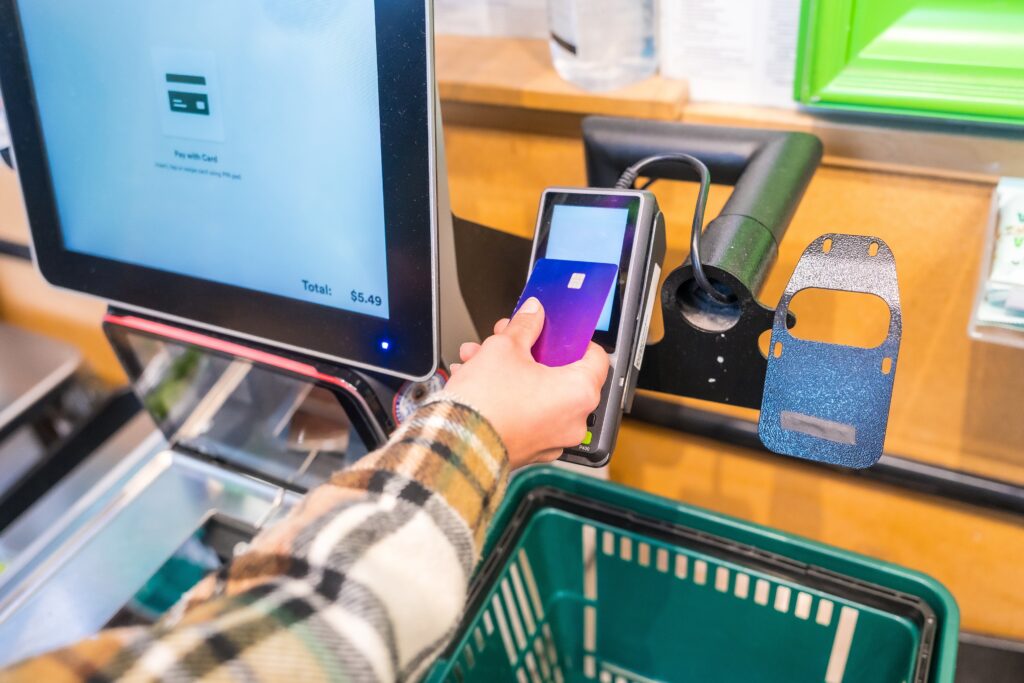
Modern grocery POS hardware features intuitive touchscreens, fast item scanning, and support for every payment type including EBT, WIC, contactless, credit, debit, Venmo, WeChat Pay, and Alipay. Fewer payment errors and faster transaction times mean more customers served per hour.
Pair your POS lanes with self-checkout solutions to expand throughput even further without adding labor.
4. Loyalty Programs Drive Repeat Business
Acquiring a new customer costs five times more than retaining an existing one. Grocery customer loyalty programs give shoppers a reason to choose your store over a competitor, and modern POS systems make those programs effortless to run.
FlexRetail’s built-in customer loyalty tools let you create and manage rewards programs directly from the POS, track purchase history, and personalize promotions based on actual shopper behavior. Every transaction feeds the loyalty engine automatically.
Explore FlexRetail’s customer loyalty solutions to see how leading independents build repeat business.
5. Smarter Labor Scheduling Cuts Overhead
Labor is typically the largest controllable cost in a grocery operation. Overstaffing during slow periods and understaffing during rush hours both damage profitability. FlexRetail’s AI layer analyzes foot traffic patterns and transaction data to recommend schedules that match real demand, helping managers deploy labor where it actually generates return.
According to the Food Industry Association, labor represents roughly 15% to 20% of total grocery operating costs. Even modest scheduling improvements can save thousands of dollars per month.
6. Reporting and Analytics Replace Guesswork
You cannot improve what you cannot measure. Legacy POS systems offer static reports that require manual exports and interpretation. Modern grocery store POS platforms deliver live dashboards, category-level performance data, and actionable recommendations that help you make faster, smarter decisions.
FlexRetail’s reporting and analytics tools give independent grocers the same data intelligence that national chains use, without the enterprise price tag.
What to Look for in a Grocery Store POS System
When evaluating modern POS options, prioritize these capabilities:
- Real-time inventory tracking with automatic reorder alerts
- AI-powered pricing and margin monitoring
- Support for EBT, WIC, and all modern payment types
- Built-in customer loyalty program management
- Integrated labor scheduling tools
- Cloud-based reporting accessible from anywhere
- Open architecture with no vendor lock-in
Implement a POS Solution with FlexRetail
A modern POS system is not just a register upgrade. It is an operational platform that touches every part of your store, from the checkout lane to the back office. Grocers who invest in the right technology consistently outperform those who stay on legacy systems, because they make faster decisions with better data.
FlexRetail was built by grocers for grocers, with over 30 years of industry experience behind every feature. Whether you are running a single neighborhood store or a regional grocery chain, the platform adapts to your operation.Schedule a demo today and see how FlexRetail can increase your grocery store profits.