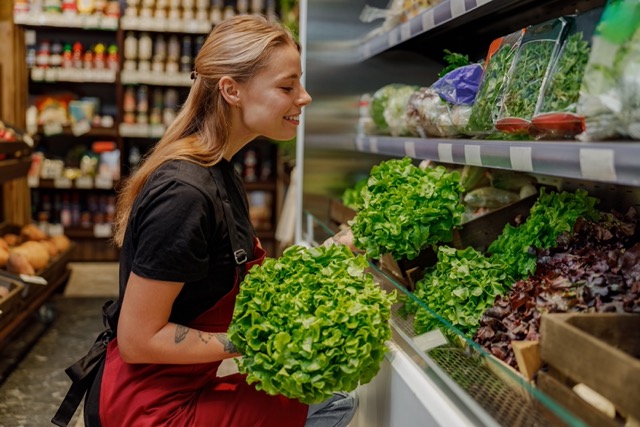
Walk through any independent grocery store and you will find the evidence everywhere. A backroom packed with product that has nowhere to go. An empty shelf where the most popular cereal used to be. Both situations feel like a problem you will fix next week, but both are costing you money right now.
Overstocking and understocking are two sides of the same coin, and for independent grocers operating on thin margins, either one can quietly drain thousands of dollars a month. Understanding the real cost of each, and how to avoid them, is one of the highest-return improvements you can make to your operation.
The True Cost of Overstocking
Most store owners know overstocking is wasteful, but few have actually calculated what it costs. Here is what you are paying for when your shelves and back room are stuffed:
Spoilage and shrinkage. In the grocery business, time is always working against you. Perishables that do not sell become loss. According to ReFED, U.S. grocery retailers lose billions annually to food spoilage. Even in dry goods, you face expiration dates, pest risk, and packaging degradation.
Tied-up capital. Every dollar sitting in unsold inventory is a dollar that is not paying staff, upgrading equipment, or funding a promotion. For stores with tight cash flow, excess inventory is effectively a loan you gave your supplier at zero interest.
Storage and handling costs. Overstocked product needs space, labor to receive and rotate it, and cooler or freezer capacity. All of that has a real cost.
Markdowns. When overstock ages, the typical fix is a markdown. You sell it for less than you paid, which means you bought high and sold low. That is the worst possible outcome for your margin.
The True Cost of Understocking
Understocking feels like a cash flow win in the moment because you are not spending money on product you do not have. But the hidden costs are just as real.
Lost sales. The most obvious cost: if a customer cannot find what they came for, they leave without buying it. A 2023 survey by IHL Group found that out-of-stocks cost retailers trillions in lost revenue globally each year.
Lost customers. One out-of-stock is an inconvenience. A pattern of out-of-stocks is a reason to shop somewhere else. For independent grocers competing with chains, losing a loyal customer to a competitor over a consistently empty shelf is a serious long-term cost.
Emergency purchasing. When you run out unexpectedly, you may end up paying more through emergency orders or sourcing from a secondary supplier at a worse price. That eats your margin.
Staff time. Staff spend time fielding questions about missing items, handling customer complaints, and logging emergency orders. That is labor that could be spent on the floor or at the register.
How the Right POS System Changes the Equation
The root cause of both overstocking and understocking is usually the same: lack of visibility into what is actually happening with your inventory in real time. Manual counts are slow, inaccurate, and always looking backward. By the time you realize you are out of stock, you already lost the sale.
A grocery-specific POS system with integrated inventory management connects what happens at the register directly to your stock levels. Every scan updates your counts automatically. You can see what is moving, what is sitting, and what is about to run out before it becomes a problem.
FlexRetail’s inventory management tools give independent grocers:
- Real-time inventory tracking tied to every transaction
- Low-stock alerts so you reorder before shelves go empty
- Sales velocity data so you can spot seasonal trends and adjust orders accordingly
- Reporting that shows which products are moving and which are taking up shelf space for no good reason
Pair that data with FlexRetail’s reporting and analytics and you have a clear picture of your inventory health across every department.
Practical Tips for Finding the Right Balance
Beyond technology, a few operational habits make a significant difference:
Set par levels for every SKU. A par level is the minimum quantity you want on hand before you reorder. Setting par levels for your top-selling items ensures reorders happen systematically, not reactively.
Review velocity by category. Produce, dairy, and frozen goods have very different turnover rates than canned goods or paper products. Your reorder frequency should reflect those differences.
Use your POS sales data when ordering. If your ordering decisions are based on gut feel or what the sales rep recommends, you are flying blind. Let your actual sales history drive your purchasing decisions.
Plan for seasonality. Your community’s buying patterns shift with holidays, school calendars, and local events. Use prior-year data from your POS to anticipate demand spikes and adjust orders in advance.
Audit slow movers regularly. Every store has items that have been sitting on the shelf for months. A quarterly review of slow-moving SKUs lets you make proactive markdown decisions before product expires.
The Balance Is Where the Margin Lives
The grocers who consistently hit their margin targets are not the ones with the most product or the leanest shelves. They are the ones who know exactly what is selling, order precisely to meet demand, and use technology to stay ahead of the curve instead of reacting to problems after the fact.
Whether you are dealing with a back room full of product you cannot move or shelves that keep running dry, the answer is better data and a system built to act on it.
See how FlexRetail’s inventory management works for independent grocery stores, or schedule a demo to see it in action.