
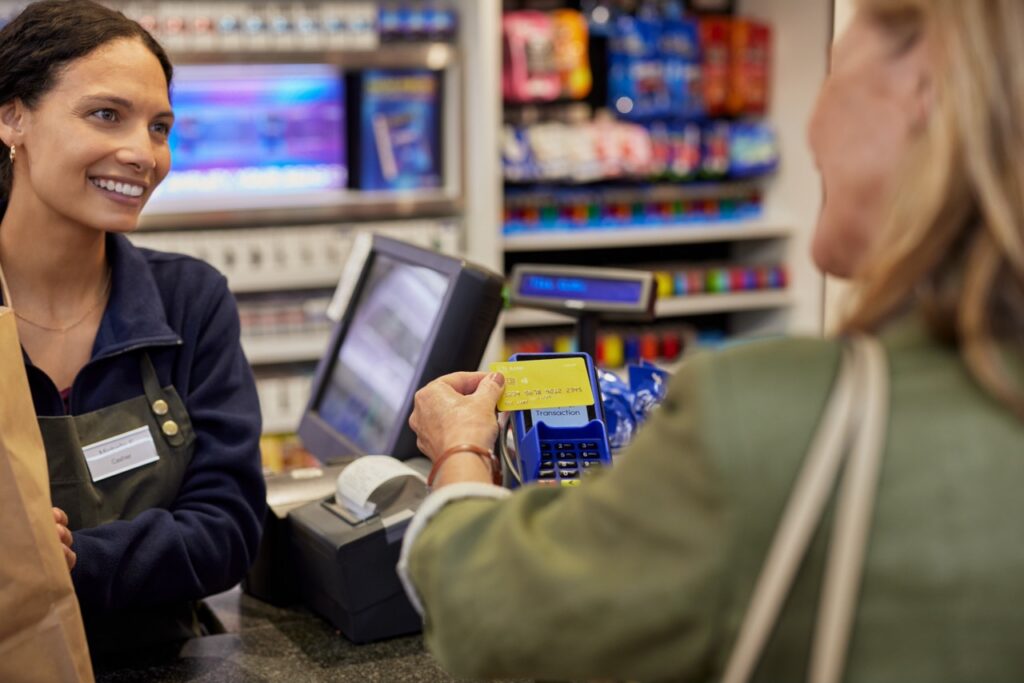
Grocery is one of the most demanding retail environments for a point of sale system. The average grocery transaction involves dozens of individual items. Prices change constantly. Products go on promotion weekly. Weight-based items require scale integration. Age verification is legally required for certain products. And all of this has to happen fast enough to keep a line of customers moving without frustration.
No other retail category puts this many demands on a POS system simultaneously. That’s why ease of use isn’t a nice-to-have in grocery; it’s a survival requirement. FlexRetail’s POS platform is built to handle these demands with an interface that makes complex transactions feel simple.
Speed Is a Feature
In grocery, checkout speed directly affects customer satisfaction and store revenue. A slow checkout line discourages return visits. It also limits throughput during peak hours, meaning fewer total transactions in the same window of time. Every second saved per transaction compounds across hundreds of daily checkouts.
A well-designed grocery POS reduces friction at every step: fast item lookup, instant price recall, automatic promotion application, and streamlined payment processing. When the system is working for the cashier rather than against them, the line moves faster and everyone leaves happier.
Reducing Cashier Errors Under Pressure
Grocery cashiers work under constant time pressure with high transaction volumes. Error rates go up when an interface is confusing, when overrides require multiple steps, or when promotional pricing doesn’t apply automatically. A modern POS designed for grocery minimizes these failure points.
Clear screen layouts, logical item categorization, and automatic rule application mean cashiers spend less mental energy navigating the system and more attention on the customer and the transaction. This is especially important for new staff who are still learning the store’s product catalog and promotional structure.
Self-Checkout That Actually Works
Self-checkout has become an expectation in grocery, but it only adds value when it works reliably. A self-checkout system with frequent errors, confusing prompts, or slow response times frustrates customers and requires constant staff intervention, which defeats the purpose entirely.
Effective self-checkout requires a POS backend that handles the same complexity as a staffed lane: promotional pricing, weighted items, age verification flags, and payment processing, all with an interface simple enough for a customer to navigate without assistance. When self-checkout works well, it expands your checkout capacity without adding staff, which is a meaningful operational advantage during peak hours.
Promotional Pricing Without the Headaches
Grocery promotions are complex. Buy two get one free. Member-only pricing. Digital coupon stacking. Weekly ad specials. These rules have to be applied accurately across every transaction without requiring a cashier to manually verify each one. A grocery POS that handles promotional logic automatically reduces errors, shortens checkout time, and builds customer trust in your pricing.
FlexRetail’s retail mobile capabilities also allow floor associates to verify promotional signage against the live system, catching discrepancies before a customer reaches the checkout and encounters a price they didn’t expect.
Inventory Visibility Across the Store
Grocery stores deal with high-velocity inventory that turns over constantly. A POS system that feeds real-time sales data into inventory tracking helps managers understand what’s selling, what needs to be reordered, and what’s moving slower than expected. This kind of visibility reduces out-of-stock situations on high-demand items and prevents overstocking on slow movers, both of which affect margin.
The FlexRetail store operations platform connects in-store transaction data with inventory management so the picture is always current. When a product sells through faster than expected, the system knows before the shelf is empty.
Training New Staff in Minutes, Not Days
Grocery stores often have high staff turnover, which means POS training is a recurring operational cost. An interface that requires extensive training before a new cashier can handle a transaction independently is a liability. A well-designed grocery POS should get a new employee functional within a single shift.
The FlexRetail interface is designed with this in mind: logical workflow, minimal steps per transaction, and clear on-screen guidance that reduces the need for a trainer standing at the shoulder throughout the learning process.
The Grocery POS Standard Has Risen
Customers who shop at well-run grocery stores with fast, accurate checkout develop high expectations. Meeting those expectations consistently requires a POS system that makes ease of use a design priority rather than an afterthought. Explore how FlexRetail’s POS platform can raise the standard at your store.