
The dollar store model was built on a simple premise: low prices, convenient locations, and a no-frills shopping experience that delivered value to budget-conscious shoppers. For decades that formula worked well enough that price was the only competitive dimension that mattered. A dollar store that was cheaper than the alternatives won, and the operational complexity of running one was low enough that sophisticated technology felt unnecessary.
That environment has changed. The dollar store segment has become more crowded, more competitive, and more demanding of operational precision than it was even five years ago. National chains have expanded aggressively into neighborhoods that independent dollar stores have historically owned. Consumer expectations around product availability, checkout speed, and store experience have risen across all retail formats including discount. And the margin pressure of operating at low price points means that operational inefficiency that might be tolerable in a higher-margin format can genuinely threaten the viability of a dollar store that is not running tightly.
POS data is the tool that lets independent dollar store operators compete on dimensions beyond price without abandoning the low-cost positioning that defines the format. Here is how.
Stock What Actually Sells, Not What You Think Sells
The most common inventory mistake in dollar store retail is reordering based on habit rather than velocity data. A product that has been on the shelf for three years gets reordered because it has always been reordered, regardless of whether it is actually moving. Meanwhile, a newer product that is turning fast gets ordered in quantities that cannot keep pace with demand because no one has looked at the data carefully enough to recognize the velocity.
Your POS data gives you the velocity picture by SKU that makes these decisions straightforward. When you can see exactly which items are turning fastest, which are sitting for weeks, and which are generating the highest revenue per square foot of shelf space, your reordering and assortment decisions become data-informed rather than habitual.
Specific inventory improvements that velocity data enables for a dollar store include:
- Identifying the top twenty percent of SKUs that generate eighty percent of your revenue and ensuring they are never out of stock
- Identifying the bottom performers that are occupying shelf space without generating proportional turns, and replacing them with higher-velocity alternatives
- Recognizing seasonal velocity shifts early enough to order ahead of demand rather than scrambling to restock after shelves empty
- Catching new products that are gaining traction quickly so you can increase order quantities before demand outpaces supply
FlexRetail’s inventory management tools surface velocity data in real time so these decisions are based on what is actually happening in your store rather than what happened last quarter.
Use Transaction Data to Understand How Your Customers Shop
Dollar store customers are not a monolithic group, and transaction data reveals meaningful differences in shopping behavior that can inform everything from store layout to promotional strategy. Basket analysis, which examines what items are purchased together in the same transaction, is particularly valuable in a dollar store context because it reveals the shopping missions customers are actually on when they visit.
Common basket patterns in dollar stores include:
- The quick fill-in trip: small baskets concentrated in household staples, cleaning supplies, or snack items that represent a shopper supplementing purchases from another store
- The occasion purchase: baskets concentrated in seasonal, party, or celebration items that indicate a specific event-driven shopping mission
- The stock-up trip: larger baskets with multiple quantities of the same item or complementary items across several categories
Understanding which of these missions is driving the most transaction volume at different times of day and different days of the week helps you make better decisions about what to stock prominently, how to configure your promotional calendar, and where to invest in selection depth versus breadth.
FlexRetail’s reporting and analytics platform gives you the transaction-level data to conduct this kind of basket analysis without building a custom data infrastructure.
Compete on Availability, Not Just Price
One of the most damaging customer experiences in a dollar store is walking in expecting a specific item and finding the shelf empty. For a format built on the promise of everyday value on everyday items, a stockout on a staple product sends a customer to a competitor and raises the question of whether your store can be relied upon as a regular shopping destination.
Availability is a competitive dimension that an independent dollar store can actually win on against larger competitors, because your closer relationship with your specific store’s demand patterns gives you the information to keep the right items stocked in a way that a chain managing inventory from a central distribution center cannot always match at the local level.
The keys to winning on availability are:
- Setting reorder thresholds that reflect actual demand velocity rather than conservative estimates that lead to gaps before the next order arrives
- Identifying the items whose stockout history shows a pattern of running out at predictable times, typically before a delivery day or during a seasonal demand spike, and adjusting order quantities to eliminate those gaps
- Building a receiving workflow that gets new inventory onto the shelf quickly after delivery rather than sitting in the back room while the shelf in front of it sits empty
FlexRetail’s back-office management tools connect receiving records to inventory levels in real time, so your available stock count reflects what is actually on the shelf rather than what arrived on the last delivery regardless of whether it has been shelved yet.
Use Shrink Data to Protect Your Margin
Dollar stores face a specific shrink challenge: the products most frequently stolen are often the highest-margin items in the store, including health and beauty products, over-the-counter medications, and small electronics accessories. In a low-price-point format where every margin point matters, shrink concentrated in your highest-margin categories has an outsized impact on profitability.
Your POS data is your first line of defense. When your inventory system tracks receiving quantities and sales quantities separately for each SKU, discrepancies that indicate theft become visible as unexplained gaps between what came in and what sold. Specific shrink signals to monitor include:
- Categories where inventory runs low consistently faster than sales velocity predicts
- Items that require frequent reordering despite modest sales velocity, suggesting loss rather than legitimate sales
- Transaction patterns that suggest internal theft including high void rates or unusual discount frequencies from specific cashiers
FlexRetail’s role-based access controls and transaction-level reporting give dollar store operators the visibility and accountability structure to address both external and internal shrink systematically rather than discovering it in an end-of-year inventory count.
Build a Checkout Experience That Matches Modern Expectations
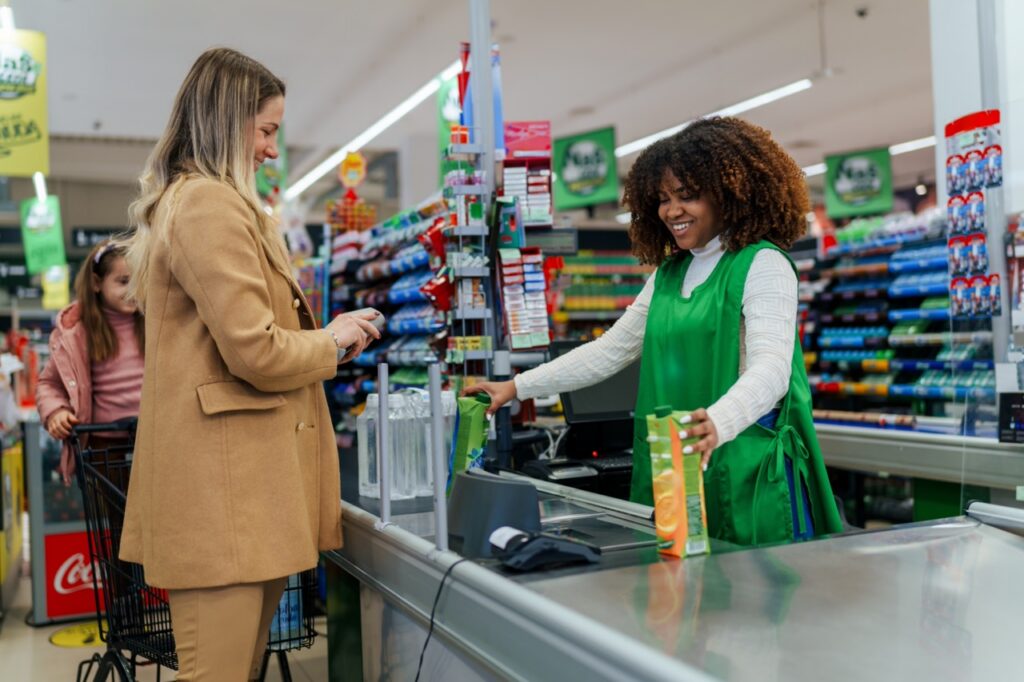
Dollar store shoppers have increasingly high expectations for checkout speed and payment flexibility regardless of price point. A checkout experience that cannot accept contactless payments, that requires multiple steps to process a simple transaction, or that creates long lines during peak periods undermines the convenience positioning that dollar stores depend on.
For independent dollar stores competing with chains that have invested in modern checkout infrastructure, the checkout experience is an area where the right POS investment pays visible competitive dividends. Specifically:
- Fast, reliable transaction processing that keeps lines moving during peak hours
- Support for every payment type customers use including EBT, contactless, and digital wallets
- Self-checkout options for small basket customers who want to move quickly without a cashier interaction
- A customer-facing display that shows prices clearly and builds confidence in the transaction
FlexRetail’s POS platform and self-checkout solution are built for exactly this kind of high-volume, low-complexity transaction environment where speed and reliability are the primary performance requirements.
The dollar store operators who thrive in the current competitive environment are not competing solely on price. They are competing on the confidence that their store will have what you need, that checkout will be fast, and that the experience of shopping there will be consistently good. POS data is what makes that consistency achievable at operational scale. Schedule a FlexRetail demo to see how the platform is configured for a dollar store operation.