
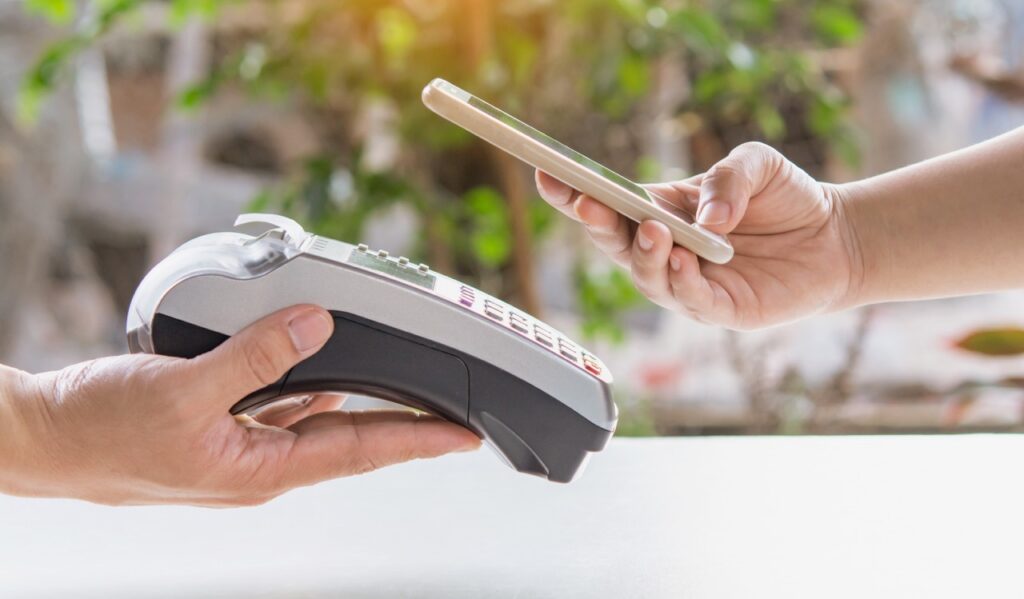
Contactless payment has moved from a convenience feature to a baseline expectation in retail. Shoppers who tap their card or phone to pay at a coffee shop, a pharmacy, and a chain grocery store on Monday morning do not lower their expectations when they walk into an independent grocery store on Tuesday. They expect the same experience everywhere they shop, and when they do not get it, the friction is noticeable and sometimes memorable in the wrong way.
For independent grocers who have not yet fully implemented contactless payment, or who have partial support that works for some payment types but not others, understanding exactly how this technology works and what full implementation requires is the starting point for closing the gap.
What Contactless Payment Actually Is
Contactless payment is any transaction where the shopper does not need to insert or swipe a card. The two primary technologies behind it are NFC (near-field communication) and QR codes.
NFC is the technology behind tap-to-pay cards and mobile wallets. When a shopper holds their card, phone, or smartwatch near a compatible payment terminal, the terminal and the payment device communicate wirelessly over a very short range, typically a few centimeters, to exchange the payment information needed to authorize the transaction. The exchange happens in under a second in most cases, which is why tap-to-pay transactions feel faster than chip or swipe.
QR-code-based payments work differently. The shopper opens a payment app, displays a QR code on their phone screen, and the terminal scans it to initiate the payment. This is the underlying technology behind Alipay and WeChat Pay, which are widely used by shoppers in many Asian communities and increasingly by other demographics as well.
Both methods are fundamentally more secure than magnetic stripe transactions because the payment information exchanged is tokenized, meaning the actual card number is never transmitted and cannot be intercepted.
Why Independent Grocers Cannot Afford Payment Gaps
Payment type gaps cost independent grocers in ways that are sometimes visible and sometimes not. The visible cost is the transaction that does not happen: a shopper who expected to tap their phone to pay, discovers the terminal does not support it, and either does not have another payment method available or simply decides the friction is not worth it.
The less visible cost is the impression left by a payment failure. A shopper who encounters a payment method that does not work at your register does not typically blame their phone or their card. They register the experience as a limitation of your store. According to Forbes, the majority of consumers now prefer contactless payment options, and that preference is strongest among the younger demographics who represent your future customer base.
For independent grocers serving communities where specific payment methods like Alipay, WeChat Pay, or Venmo are commonly used, the cost of not supporting those methods is not just lost transactions. It is a message to that community about whether your store is designed for them.
What Full Contactless Support Actually Requires
Supporting contactless payment is not simply a matter of having a terminal that accepts tap-to-pay Visa and Mastercard. Full contactless support for an independent grocery store in 2026 means your system handles all of the following:
- NFC tap-to-pay for credit and debit cards
- Apple Pay and Google Pay transactions from smartphones and smartwatches
- Venmo, which uses a QR code-based flow
- Alipay and WeChat Pay for shoppers in communities where these are standard
- EBT contactless, which has expanded as states have updated their EBT programs to support tap-to-pay functionality
- eWIC transactions, which have their own certification requirements separate from standard payment processing
Each of these requires both a compatible payment terminal and a POS software layer that knows how to route and process each transaction type correctly. A terminal that supports Apple Pay but not Alipay, or that handles standard contactless but not eWIC, is only partially meeting your customers’ needs.
FlexRetail’s payments and security platform is built to handle the full range of contactless payment types through a single integrated system, so your cashiers process every transaction through the same workflow regardless of how the customer is paying.
How EBT and eWIC Fit Into the Contactless Picture
EBT and eWIC deserve specific attention because they are both mission-critical for many independent grocery stores and frequently mishandled in partial payment implementations. Many contactless payment upgrades focus exclusively on credit and debit and leave EBT and eWIC on older processing infrastructure that does not support tap-to-pay or modern terminal interfaces.
This creates a two-tier checkout experience where most customers get a fast, modern transaction and EBT and WIC users get a slower, more cumbersome one. Beyond the operational inefficiency, this creates a dignity issue for a segment of your customers who deserve the same smooth checkout experience as everyone else.
FlexRetail’s EBT, WIC, and SNAP handling integrates these payment types into the same checkout flow as every other payment method, ensuring consistent transaction speed and experience across your entire customer base.
What Hardware You Need to Support Contactless
Your payment terminal is the physical interface between the customer’s payment method and your POS system, and not all terminals are created equal. A terminal that was purchased five or more years ago may have NFC capability that was not enabled, or may lack the hardware support for newer QR-code-based payment methods entirely.
When evaluating your current hardware for contactless readiness, check:
- Whether your terminals have NFC antennas and whether they are activated
- Whether your payment processor has certified your terminals for Apple Pay and Google Pay
- Whether your terminals support QR code scanning for Alipay and WeChat Pay
- Whether your receipt printers and customer-facing displays are compatible with your contactless terminal configuration
FlexRetail’s POS hardware is tested and configured to work with the full range of payment types the platform supports, so you are not discovering hardware compatibility gaps after you have already committed to a payment processing upgrade.
The Security Advantage of Contactless
One concern independent grocers sometimes raise about contactless payment is security. The concern is understandable: transactions that do not require a PIN or signature feel less verified. In practice, contactless NFC transactions are more secure than magnetic stripe swipes for several reasons:
- Tokenization means the card number itself is never transmitted, so there is nothing useful to intercept
- Each NFC transaction generates a one-time cryptographic code that cannot be reused even if captured
- Mobile wallet transactions like Apple Pay add a second layer of authentication through the device’s biometric or PIN unlock
PCI compliance for contactless payment is also well-established. The PCI Security Standards Council provides specific guidance for contactless payment acceptance that your payment processor and POS vendor should be following as part of their standard implementation.
Getting Started
If your store has gaps in contactless payment support, the path to closing them runs through three things: an honest audit of which payment types your current terminal and software support, a conversation with your POS vendor about what an upgrade to full contactless support requires, and a timeline for implementation that minimizes disruption to your checkout operations.
FlexRetail’s demo is a good place to see exactly how contactless payment processing works across the full range of payment types your customers use, and to understand what implementation would look like for your specific store configuration.