
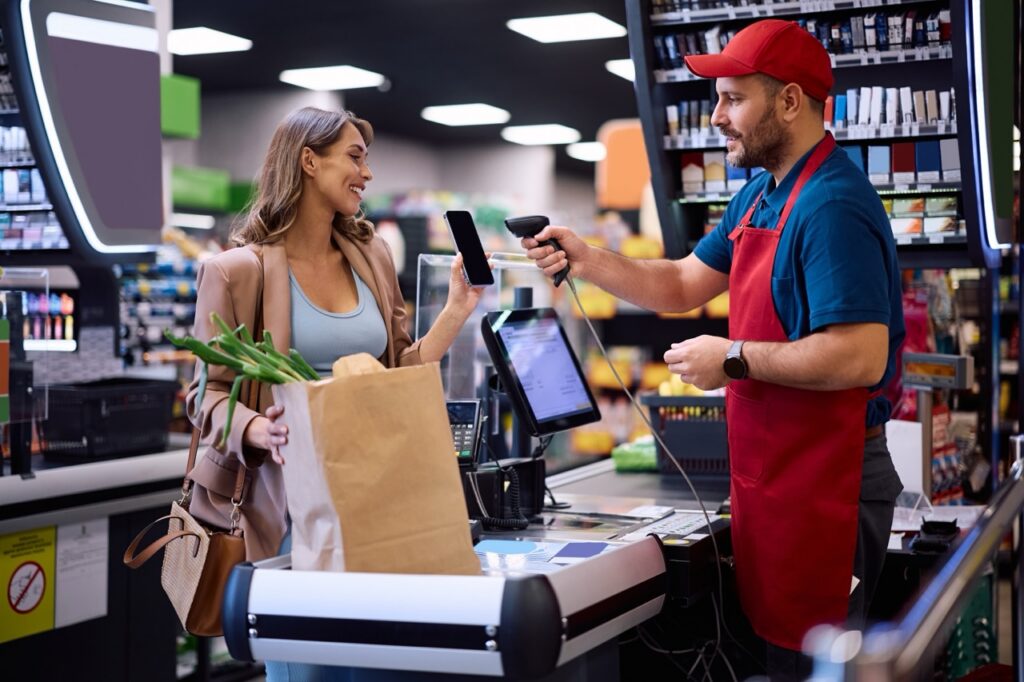
Paper coupons have not disappeared from grocery retail, but their share of total coupon redemptions has shrunk dramatically as digital alternatives have become the default for most shoppers. Digital coupons issued through manufacturer promotions, grocery apps, loyalty programs, and retailer websites now account for the majority of coupon activity in grocery, and that share continues to grow as more shoppers manage their grocery planning on their phones rather than with scissors and a Sunday newspaper insert.
For independent grocers, the shift to digital coupons is an opportunity and a technology challenge simultaneously. The opportunity is access to manufacturer promotional funding that was historically skewed toward chains with the infrastructure to process digital offers at scale. The challenge is that digital coupon redemption requires specific POS capabilities that not all independent grocery systems support fully, and a system that handles digital coupons inconsistently creates both checkout friction and financial exposure from incorrect redemptions.
Here is a clear explanation of how digital coupons actually work at the register, what the technology requires from your POS, and what FlexRetail’s partnership with nData makes possible for independent operators.
The Difference Between Digital and Paper Coupons at the Register
A paper coupon is a physical document that a cashier takes from the customer, visually verifies, and scans. The barcode on the coupon encodes the discount value and the eligible product identifier. The POS reads the barcode, verifies that an eligible product is in the transaction, and applies the discount. The physical coupon is retained as proof of redemption and submitted to the manufacturer for reimbursement.
A digital coupon follows the same basic logic but without the physical document. Instead of a paper coupon with a barcode, the discount is delivered electronically, either loaded onto the customer’s loyalty account, stored in a retailer app, or presented as a scannable barcode on the customer’s phone. The POS needs to recognize the digital offer, verify eligibility against the items in the transaction, apply the discount, and record the redemption for reimbursement purposes, all without a physical document to verify.
This sounds straightforward but requires several specific capabilities from your POS system that paper coupon processing does not.
How the 8112 Digital Coupon Standard Works
The dominant technical standard for digital manufacturer coupons in grocery retail is the GS1 8112 format, which is the same underlying standard used for paper coupons but implemented digitally. An 8112 coupon encodes the manufacturer’s identification, the eligible product family, the discount value, and a unique offer code that prevents the same digital coupon from being redeemed more than once.
When a shopper presents an 8112 digital coupon, whether as a barcode on their phone or as a promotion loaded to their loyalty account, the POS needs to:
- Read and decode the 8112 barcode correctly
- Verify that an eligible product matching the coupon’s product family code is present in the current transaction
- Apply the correct discount value to the eligible item
- Record the unique offer code to prevent duplicate redemption
- Generate the correct redemption data for manufacturer reimbursement submission
A POS that cannot read 8112 barcodes, cannot verify eligibility in real time, or does not record redemption data correctly creates problems at every stage: checkout friction when offers do not apply, potential double-redemption exposure, and reimbursement errors that affect your promotional economics.
FlexRetail’s partnership with nData brings full 8112 digital coupon support to independent grocers through an integrated solution that handles the entire digital coupon workflow within the same system running your registers.
Load-to-Card Coupons and Loyalty Integration
Beyond manufacturer-issued 8112 coupons, many grocery loyalty programs use load-to-card promotions where digital offers are linked directly to a customer’s loyalty account rather than presented as a separate barcode. When a loyalty member scans their card or enters their phone number at the register, any loaded offers are automatically checked for eligibility against the current transaction and applied without the customer needing to present a separate coupon.
This workflow requires tight integration between your loyalty platform and your POS transaction engine. The loyalty system needs to communicate the customer’s loaded offers to the POS in real time at the start of the transaction, and the POS needs to verify eligibility, apply the correct discounts, and update the loyalty account to reflect the redeemed offers before the transaction closes.
When this integration works correctly, the customer experience is seamless: they scan their loyalty card, their discounts apply automatically, and the total reflects all of their loaded offers without any additional steps. When it does not work correctly, offers fail to apply, require manual cashier intervention, or apply incorrectly, each of which creates a negative customer experience that erodes trust in both the loyalty program and the store.
FlexRetail’s customer loyalty platform is built as a native component of the POS rather than a connected third-party system, which means load-to-card coupon application is handled through the same transaction engine that processes every other discount type.
Retailer-Issued Digital Coupons
In addition to manufacturer coupons, many independent grocers issue their own promotional offers digitally through their loyalty app, email marketing, or SMS campaigns. A shopper who receives a digital offer for a specific product discount or a spend-threshold reward needs to be able to present that offer at the register in a format your POS can read and apply.
Retailer-issued digital coupons typically take one of two forms:
- A scannable barcode or QR code that the shopper presents from their phone screen, which the cashier scans at the register
- A promotion code that the customer provides verbally or that is stored in their loyalty account and applies automatically at checkout
Both require your POS to recognize the offer format, verify that the applicable conditions are met, apply the discount correctly, and record the redemption so the offer cannot be used again if it is single-use.
The operational risk of retailer-issued digital coupons is inconsistent application. When a cashier has to manually enter a promotion code or override a price to honor a digital offer, the process depends on cashier knowledge and judgment rather than system logic. A POS that handles retailer-issued digital coupons through automated verification eliminates this inconsistency and ensures every valid offer is applied correctly regardless of which cashier is running the lane.
What Incorrect Coupon Handling Actually Costs You
The financial exposure from digital coupon handling errors runs in both directions. Accepting invalid offers or allowing duplicate redemptions costs you margin that you will not recover in manufacturer reimbursement. Failing to apply valid offers correctly creates customer dissatisfaction, potential reputation damage if the error is noticed at the register, and the operational cost of resolving disputes after the fact.
Reimbursement accuracy is a specific financial concern for stores processing manufacturer digital coupons. Redemption data that is incorrectly formatted or missing required fields may result in reimbursement claims being rejected, which means you absorbed the discount cost without recovering it from the manufacturer. A POS that generates clean, correctly formatted redemption data from every digital coupon transaction protects your reimbursement economics without requiring manual reconciliation.
Getting Digital Coupon Capability Right
For independent grocers who are not currently accepting digital coupons or whose digital coupon handling is inconsistent, the path to fixing this runs through the same place as most POS capability questions: the right platform with the right integrations.
Digital coupon support is not a feature that can be easily bolted onto a system that was not designed for it. It requires the underlying architecture to handle real-time eligibility verification, loyalty account communication, and redemption data recording as integrated parts of the transaction flow rather than manual steps layered on top of it.
FlexRetail’s nData integration and full payments and security platform are built to support the complete digital coupon workflow for independent grocers. Schedule a demo to see how digital coupon processing works inside the platform and what the setup process looks like for your store.