
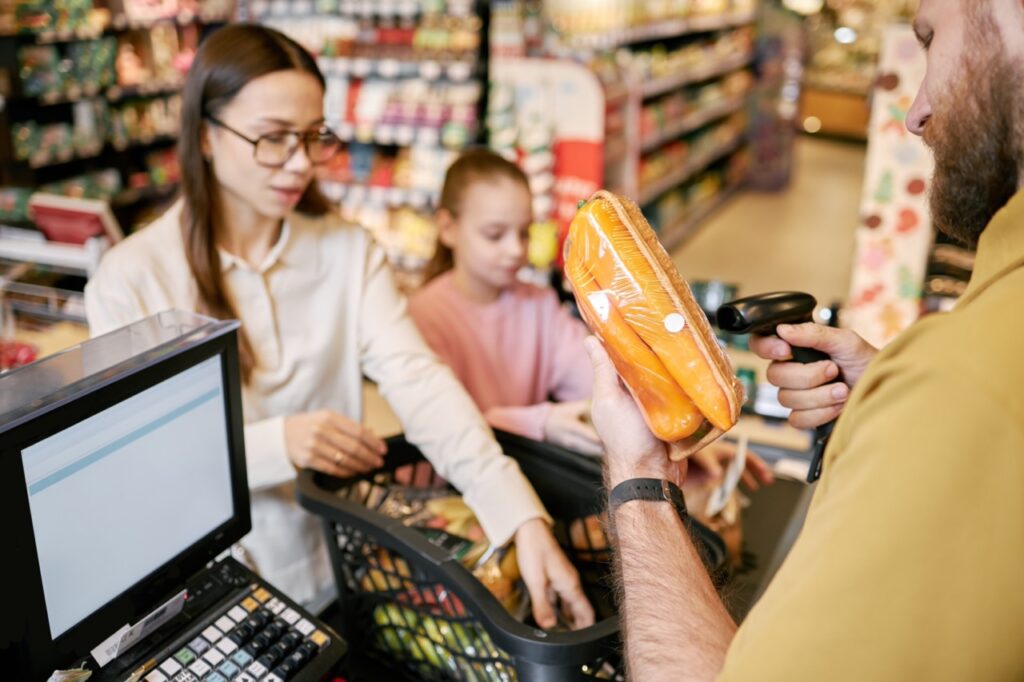
Participating in the SNAP program, formerly known as food stamps, gives an independent grocery store access to a significant pool of purchasing power from community members who depend on food assistance benefits. For many independent grocers serving lower-income or immigrant communities, SNAP sales represent a meaningful percentage of total revenue and an irreplaceable service to the community. Losing SNAP authorization, or facing civil money penalties as a result of a compliance review, is not just a revenue problem. It is a community service failure.
The USDA Food and Nutrition Service conducts compliance reviews of authorized SNAP retailers on an ongoing basis. Some reviews are triggered by statistical anomalies in transaction data. Others are part of regular program oversight. Some involve undercover shopping operations where program investigators pose as customers to observe how SNAP transactions are handled. All of them are consequential, and all of them are best navigated by stores that understand what compliance actually requires rather than ones that have passively assumed their practices are fine.
Here is what independent grocers need to know about how SNAP compliance reviews work, what triggers them, and what your day-to-day operations and POS system need to demonstrate.
What Triggers a SNAP Compliance Review
The USDA uses statistical transaction analysis to identify retailers whose EBT transaction patterns deviate significantly from what is expected for their store type, size, location, and customer demographics. Understanding what the algorithms look for helps you understand what your own data should look like and what patterns would attract attention.
Transaction patterns that commonly trigger review include:
- Unusually high average EBT transaction amounts compared to similar stores in your area. If comparable neighborhood grocery stores average a fifteen-dollar EBT transaction and your store is averaging forty dollars, that statistical outlier warrants investigation because it is inconsistent with normal grocery purchasing behavior.
- Unusually high velocity of EBT transactions relative to your store size and customer volume. A small corner store processing EBT transaction volumes that would be consistent with a full-service supermarket is statistically anomalous in a way that suggests either extraordinary legitimate customer volume or transactions that are not corresponding to actual food purchases.
- Transactions that are suspiciously round numbers. Legitimate grocery transactions involve scanning individual items at their actual prices, which almost never produces a round total. A pattern of EBT transactions for exactly fifty dollars or exactly one hundred dollars is a statistical signature of trafficking rather than actual food retail.
- Repeated transactions from the same EBT card in short time windows. A card that makes three fifty-dollar EBT transactions at your store on the same day is engaging in a pattern that is inconsistent with normal household grocery purchasing and consistent with benefit trafficking.
- Transaction patterns clustered at specific times that are inconsistent with normal shopping behavior, such as a surge of large EBT transactions in the fifteen minutes before your store closes.
Your POS transaction data tells you what your own patterns look like. FlexRetail’s reporting and analytics tools give you access to the EBT transaction data at the level of detail needed to monitor your own patterns before an external review identifies a problem you were not aware of.
What Undercover Compliance Visits Look For
In addition to transaction data review, USDA compliance investigations include undercover shopping visits where investigators pose as SNAP customers to observe whether your store is operating in compliance with program rules. What undercover investigators are looking for includes:
- Whether your store stocks the minimum required inventory to qualify as a SNAP retailer. SNAP retailer authorization requires that stores carry a minimum number of food staples in defined categories. A store that obtained authorization based on a certain inventory level but has since reduced its stock may no longer meet the minimum requirement.
- Whether your cashiers are correctly identifying SNAP-eligible and SNAP-ineligible items. An investigator who presents a mixed basket and observes a cashier charging SNAP benefits for items that are not eligible, or who witnesses staff suggesting to a customer that non-food items can be covered by SNAP, is documenting a compliance violation.
- Whether your store is engaged in benefit trafficking. An investigator who is offered cash in exchange for their EBT card balance, or who witnesses a transaction that does not correspond to actual food being purchased, has documented a trafficking violation that carries severe consequences including permanent disqualification and criminal referral.
- Whether your store is accepting SNAP for hot prepared foods that are served at temperature. SNAP benefits cannot be used for hot foods intended for immediate consumption, which includes rotisserie chicken, hot soup, and other prepared foods that are served hot. Stores with prepared food sections need to have clear procedures for distinguishing between SNAP-eligible and SNAP-ineligible prepared food items.
What Your POS System Needs to Demonstrate
A well-configured POS system is one of your strongest assets in a compliance review because it creates a documented record of how transactions were processed that can be reviewed to confirm compliance rather than relying on staff recollection.
Specifically, your POS should be configured to:
- Accurately classify every item in your catalog as SNAP-eligible or SNAP-ineligible based on current program rules, so that SNAP benefits are automatically applied only to eligible items
- Generate complete itemized transaction records for every EBT transaction that can be produced during a compliance review to demonstrate what was purchased with SNAP benefits
- Apply SNAP eligibility rules consistently regardless of which cashier is running the transaction, removing the variability that comes from relying on individual cashier judgment
- Maintain transaction history in a format that is accessible for compliance review without requiring reconstruction or manual compilation
FlexRetail’s payments and security platform handles SNAP eligibility determination through item-level product classification in your catalog, ensuring that eligibility is applied consistently and that the transaction record accurately reflects what was and was not charged to SNAP benefits.
What SNAP Retailer Compliance Actually Requires Day to Day
Beyond the transaction-level compliance that your POS handles, SNAP retailer compliance has operational requirements that are your team’s responsibility to maintain consistently.
Stock requirements must be maintained on an ongoing basis, not just at the time of initial authorization. The SNAP program requires authorized retailers to maintain minimum inventory levels in qualifying staple food categories throughout their authorization period. A store that seasonally reduces its inventory or shifts its product mix needs to confirm that it continues to meet the minimum stock requirements.
Price accuracy between shelf and register is a compliance expectation. Charging a different price at the register than what is shown on the shelf tag is a consumer protection issue that can be flagged in a compliance review. Your pricing update process needs to ensure that shelf prices and register prices stay synchronized.
Staff training on SNAP rules needs to be documented. If a compliance review finds that a cashier was processing SNAP transactions incorrectly, having documented training records that demonstrate the employee was trained on SNAP rules is meaningful context that a store with no training documentation cannot provide.
Responding to a Compliance Review
If your store receives a compliance review notification or is contacted by a USDA regional office, the response process matters as much as the underlying compliance record. Specific steps that support a favorable outcome include:
- Engaging cooperatively and promptly with the review process rather than being unresponsive or adversarial. Compliance reviewers have significant discretion in how findings are characterized and what remedies are recommended, and the tone of the interaction affects that discretion.
- Pulling your transaction records promptly and completely to respond to any specific transaction inquiries. A store that can produce complete, accurate transaction records demonstrates operational competence that is relevant to how findings are interpreted.
- Consulting with a SNAP compliance attorney or consultant if the review involves serious allegations. The SNAP program’s civil money penalty and disqualification procedures have specific timelines and response requirements that are easy to miss without experienced guidance.
- Using the review as an opportunity to identify and correct any genuine compliance gaps before they become findings. A store that demonstrates proactive compliance improvement during a review is in a better position than one that appears to be responding reactively to external pressure.
Schedule a FlexRetail demo to walk through how the SNAP eligibility configuration, transaction record keeping, and EBT reporting capabilities support your compliance posture during both normal operations and a compliance review.