
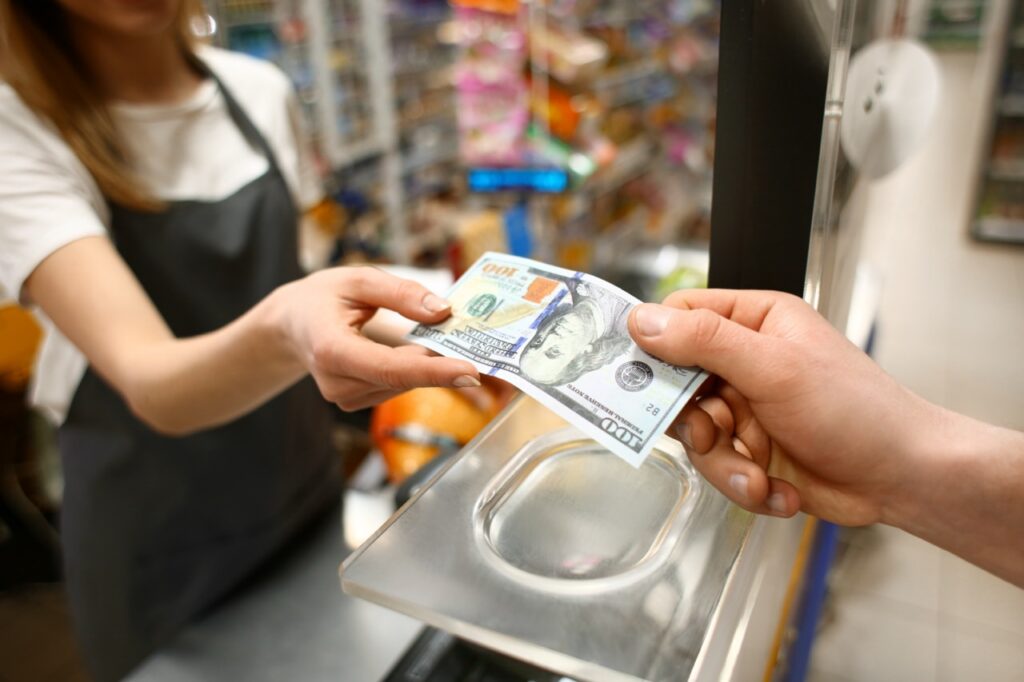
Payment processing fees are a real and ongoing cost for every independent grocer who accepts card payments, and that cost has grown more visible as card usage has replaced cash across most retail categories including grocery. For a store processing significant volume on thin grocery margins, the aggregate processing fee represents a meaningful line item that operators are understandably motivated to reduce or recover.
Two mechanisms have gained traction in retail for addressing this cost: surcharging, which adds a fee to card transactions to offset processing costs, and cash discount programs, which offer a discount on the shelf price to customers who pay with cash rather than cards. Both are legal in most states, both have grown in adoption as processing costs have increased, and both carry implementation requirements and customer experience tradeoffs that independent grocers need to understand before deciding whether and how to implement them.
Here is a clear explanation of how each program works, what the legal and operational requirements are, and how to think about the customer experience implications for an independent grocery operation specifically.
How Credit Card Surcharging Works
A surcharge is an additional fee applied to a credit card transaction that is designed to offset the merchant’s processing cost for that transaction. Under the rules established through the Visa and Mastercard merchant agreements, surcharges are permitted subject to specific requirements:
- Surcharges can only be applied to credit card transactions, not to debit card transactions even when processed as credit
- The surcharge amount cannot exceed the merchant’s actual cost of acceptance for that card type, capped at four percent under current network rules
- Merchants must notify the card networks in advance of implementing a surcharge
- Clear disclosure of the surcharge must be provided to customers at the point of entry to the store and at the point of sale, before the transaction is completed
- The surcharge must appear as a separate line item on the receipt
State law adds another layer of complexity. As of late 2026, a small number of states including Connecticut, Massachusetts, and Puerto Rico still prohibit credit card surcharging entirely regardless of the network rules. Before implementing a surcharge program, confirming your state’s current legal status is a prerequisite.
The practical implementation of surcharging requires your POS system to recognize whether a transaction is being processed as a credit card rather than a debit card and apply the surcharge only to credit transactions. This distinction is not always straightforward because many customers do not know or do not specify whether their card is being processed as credit or debit, and some cards can be processed either way depending on how the customer authenticates.
How Cash Discount Programs Work
A cash discount program takes a structurally different approach to the same cost recovery goal. Rather than adding a fee to card transactions, a cash discount program sets the shelf price at a level that includes the processing cost and then offers a discount to customers who pay with cash, effectively returning the processing cost to cash-paying customers.
From a customer communication perspective, this framing is meaningfully different. A surcharge can feel punitive to a customer who is being charged extra for using their card. A cash discount can feel like a benefit for customers who pay with cash, even though the economic outcome for the merchant is identical.
Cash discount programs have fewer network rule restrictions than surcharges because they do not technically impose a fee on card transactions. They are legal in all fifty states. And they do not require advance notification to card networks. These characteristics have made cash discount programs more widely adopted than surcharging in many retail segments including grocery.
The implementation requires clear disclosure at the point of entry and point of sale, pricing displayed at the cash discount price with clear communication that card-paying customers will pay a higher price, and POS configuration that applies the cash discount automatically when a cash payment is tendered rather than requiring cashier calculation.
The Customer Experience Reality for Independent Grocery
The operational and legal framework for both programs is relatively straightforward. The harder question for an independent grocer is the customer experience impact, because independent grocery’s competitive position depends heavily on the customer relationship in ways that a surcharge or price differential can complicate.
Customers who regularly shop at your store with a credit card and encounter a surcharge for the first time may perceive it as a penalty for behavior that felt perfectly normal until that transaction. Customers who pay with cash may appreciate the discount framing of a cash discount program, but customers who pay with cards, which in many demographics is the majority, will be paying more than the shelf price in practice.
The customer experience tradeoff is most acute for specific customer segments:
EBT and WIC customers, who are required to pay electronically and therefore cannot benefit from a cash discount regardless of their preference, should not be subject to a surcharge or the card-transaction price differential under a cash discount program. Most implementations exclude EBT and WIC from surcharge or differential treatment, both because the customer has no alternative payment option and because adding cost to food assistance transactions creates both an ethical and a reputational concern.
Loyal high-value customers who pay with rewards credit cards will be disproportionately affected by surcharging because premium rewards cards carry the highest interchange rates and therefore the highest potential surcharge. These are often your best customers, and a pricing penalty on their payment method sends a message about how you value the relationship.
What Your POS Needs to Support Either Program
Both surcharging and cash discount programs require specific POS configuration to implement correctly. A system that cannot distinguish credit from debit at the transaction level, that cannot apply differential pricing automatically based on payment method, or that cannot generate compliant receipts with the required line items cannot support either program without significant manual workarounds that will create both cashier errors and customer complaints.
Specific POS requirements for compliant implementation include:
- Payment type detection that identifies credit versus debit at the transaction level, not just based on the card number
- Automatic surcharge application or cash discount application based on the detected payment type
- Receipt generation that shows the surcharge as a separate line item or the cash discount as a separate reduction, as required by card network rules and FTC disclosure requirements
- Exclusion logic that prevents surcharge or cash price differential from applying to EBT, eWIC, and other exempt payment types
- Clear customer-facing display communication of the applicable pricing before payment is processed so the customer can make an informed decision about their payment method
FlexRetail’s payments and security platform supports the payment type detection and transaction-level pricing logic that compliant surcharge and cash discount implementation requires. Before implementing either program, a conversation with your payment processor and your POS vendor about the specific configuration requirements for your setup is the right starting point.
The Decision Framework
Whether either program makes sense for your specific store depends on a few key factors:
Your current processing cost burden, specifically whether your effective processing rate on credit transactions is high enough that recovery through a surcharge or cash discount program would produce meaningful savings after accounting for the operational cost of implementing and maintaining the program.
Your customer payment mix, specifically what percentage of your transactions are credit card versus debit versus cash versus EBT. A store where sixty percent of transactions are already cash or debit will see much smaller savings from either program than one where eighty percent are credit.
Your customer relationship and competitive context. An independent grocer competing primarily on community relationship and customer experience in a market with multiple alternatives carries more customer experience risk from visible card pricing than one in a market where alternatives are limited.
Schedule a FlexRetail demo to walk through the payment type analytics available in your store’s data and discuss how the platform handles surcharge and cash discount program configuration for your specific payment mix.