
An independent grocery operator who has grown from one store to three or five has built something genuinely impressive. Each store is evidence that the model works, that there is community demand for what they offer, and that the operator has the skill and judgment to run a complex retail business. The transition from a single-store operator to a grocery group is one of the most difficult in independent retail, and the difficulty is almost never about demand. It is about consistency.
A single store reflects the operator. Their standards, their product judgment, their relationship with staff, and their daily presence keep quality consistent without requiring formal systems. Add a second location and that personal presence is divided. Add a third and it is spread thin. By the time a group reaches four or five stores, the informal systems that held things together at one location have either been replaced by formal operational infrastructure or they have been replaced by inconsistency that shows up in customer experience gaps, pricing discrepancies, and performance differences between locations that are difficult to diagnose and correct.
Standardizing operations across an independent grocery group is not about removing the character that makes each location valuable to its community. It is about ensuring that the operational foundation underneath each store is consistent enough to be reliable and transparent enough to be manageable from a group-level perspective. Here is what that actually requires.
Define What Standardization Means for Your Group Specifically
The first step in building operational consistency across multiple grocery locations is being explicit about what should be standardized and what should remain location-specific. Not everything should be the same across locations. A store in a predominantly Latin neighborhood and a store two miles away in a mixed urban neighborhood may carry different product mixes, run different promotions, and employ staff who reflect different community relationships. That differentiation is a strength, not a problem to fix.
What does need to be standardized are the operational foundations that make each store manageable from a group perspective and consistent from a customer perspective:
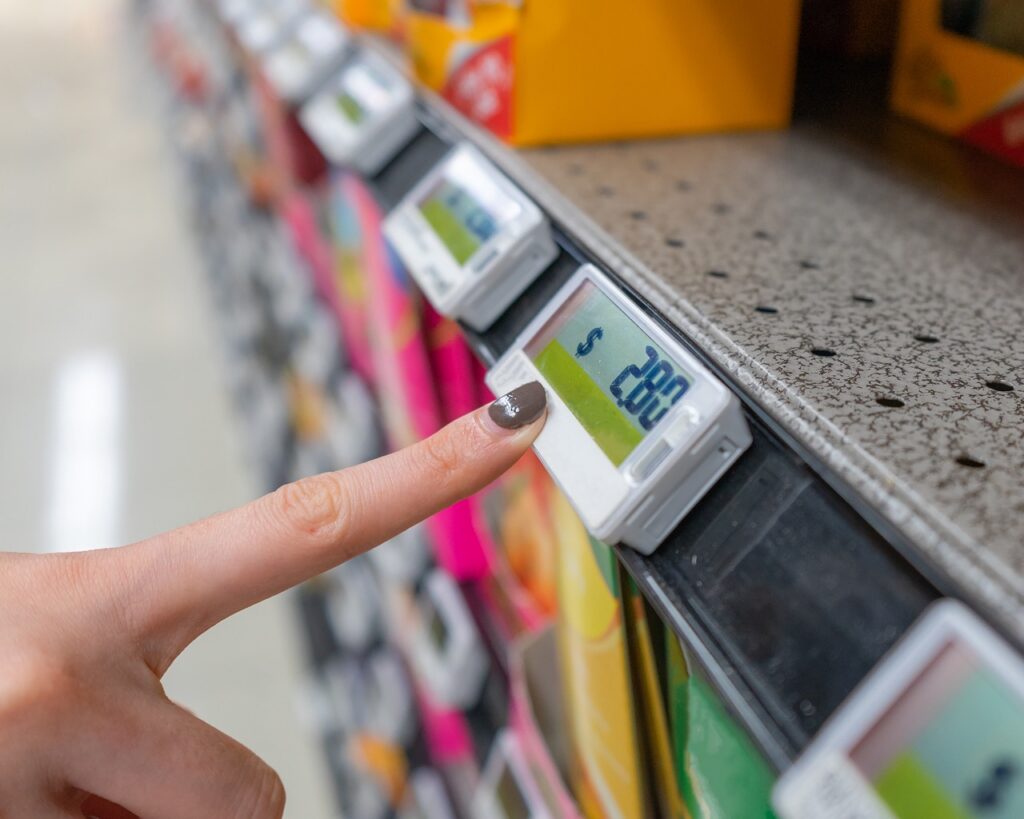
- Pricing and promotional management: customers who shop at multiple locations in your group should encounter consistent pricing on shared products, and promotional pricing should activate and deactivate at the same time across all relevant locations
- Transaction and cash handling procedures: the process for opening a register, counting a drawer, processing a return, and handling a payment dispute should be identical across locations so that a manager who moves between stores is not learning a new system at each one
- Inventory management practices: how product is received, how inventory is counted, how reorder thresholds are set, and how shrink is tracked should follow consistent methodology across all locations so that your group-level reporting reflects comparable data
- Employee access and permission structures: the capabilities associated with each role should be consistent across locations so that a cashier who works at two locations is not navigating different permission structures depending on which store they are in
- Reporting and review cadence: the same reports reviewed at the same frequency by managers at every location so that group-level performance conversations are based on comparable data rather than each location’s idiosyncratic interpretation of what to track
Centralized Technology Is the Foundation of Operational Consistency
The most effective mechanism for enforcing operational consistency across multiple grocery locations is a technology platform that makes consistency the default rather than the result of ongoing coordination. When a price change made at the group level propagates to all locations automatically, price consistency does not require a coordination call with each store manager. When the permission structure for each role is configured centrally and applied consistently across all locations, access control consistency does not require each store manager to independently configure their system correctly.
FlexRetail’s enterprise management platform is built around this centralized architecture. Group-level decisions about pricing, catalog management, promotional configuration, and permission structures are made once and applied consistently across all locations, while location-specific decisions remain controllable at the store level within parameters the group establishes.
This architecture matters operationally in ways that extend beyond the obvious efficiency benefits. When every location is drawing from the same product catalog, updating the catalog once benefits all locations simultaneously. When promotional pricing is managed centrally, you can run a group-wide promotion with confidence that it will activate correctly at every location on the right day rather than depending on each store manager to implement it independently.
Build Standardized Procedures Around Your POS Workflows
Operational standardization is not only a technology question. It requires documented procedures that define how the technology should be used, what the standards are for common operational decisions, and how exceptions should be handled. These procedures become your group’s operational playbook, and they need to exist in writing rather than in the institutional memory of your most experienced managers.
The procedures worth standardizing and documenting across a grocery group include:
- Opening and closing procedures for each register, including expected cash counts, system checks, and handoff documentation
- Receiving procedures that define how deliveries are checked in, how discrepancies are documented, and how received inventory is entered into the system
- Return and refund handling procedures that define authorization thresholds, documentation requirements, and the process for handling returns that fall outside normal parameters
- Cash handling procedures including till management, safe drop frequency, and end-of-day reconciliation steps
- Inventory count procedures that define count frequency, methodology, and how count results are entered and reconciled
When these procedures are consistent across locations and documented clearly enough for a new manager to follow without prior training, the operational quality of each store becomes less dependent on the specific individuals running it on any given day. FlexRetail’s back-office management tools provide the system infrastructure that these procedures run on, with consistent workflows across all locations that support rather than complicate standardized execution.
Build Group-Level Reporting That Makes Performance Visible
Standardized operations are only valuable if you can see whether they are working consistently across locations. Group-level reporting that shows you performance by location, allows you to compare locations against each other and against group benchmarks, and surfaces the specific metrics that indicate whether operational standards are being maintained gives you the visibility to manage a multi-location group without being physically present at every store every day.
The reporting capabilities that matter most for group-level management include:
- Consolidated revenue and margin reporting that shows group-wide performance and location-by-location breakdown simultaneously
- Inventory reporting that surfaces stockout rates, shrink rates, and inventory accuracy by location so you can identify which stores are managing inventory well and which need attention
- Transaction-level reporting by location that lets you compare cashier performance metrics, void rates, and exception frequencies across the group
- Cash reconciliation reporting that shows variance rates by location and identifies patterns that may indicate procedural gaps or accountability issues
FlexRetail’s reporting and analytics platform supports both individual location and consolidated enterprise views, making the group-level visibility that multi-location management requires practical without requiring a separate business intelligence tool.
Use Performance Benchmarking Across Locations to Drive Improvement
One of the underutilized advantages of running multiple grocery locations is the ability to benchmark each location’s performance against the others and to identify which practices at your best-performing location could be replicated at locations that are underperforming on specific metrics. This kind of internal benchmarking is only possible when your reporting is standardized enough to make the comparisons meaningful.
When your labor cost ratio, shrink rate, customer transaction frequency, and average basket size are measured consistently across all locations using the same methodology and the same reporting tools, differences between locations become actionable rather than ambiguous. A location whose shrink rate is significantly above the group average is not just an anomaly. It is a signal that something specific is different about how that store operates, and it is worth investigating whether the cause is a procedure gap, a staffing issue, or a facility factor that can be addressed.
Schedule a FlexRetail demo to walk through how the enterprise management and reporting capabilities support group-level operational standardization and what the multi-location management experience looks like in practice for a grocery group your size.