
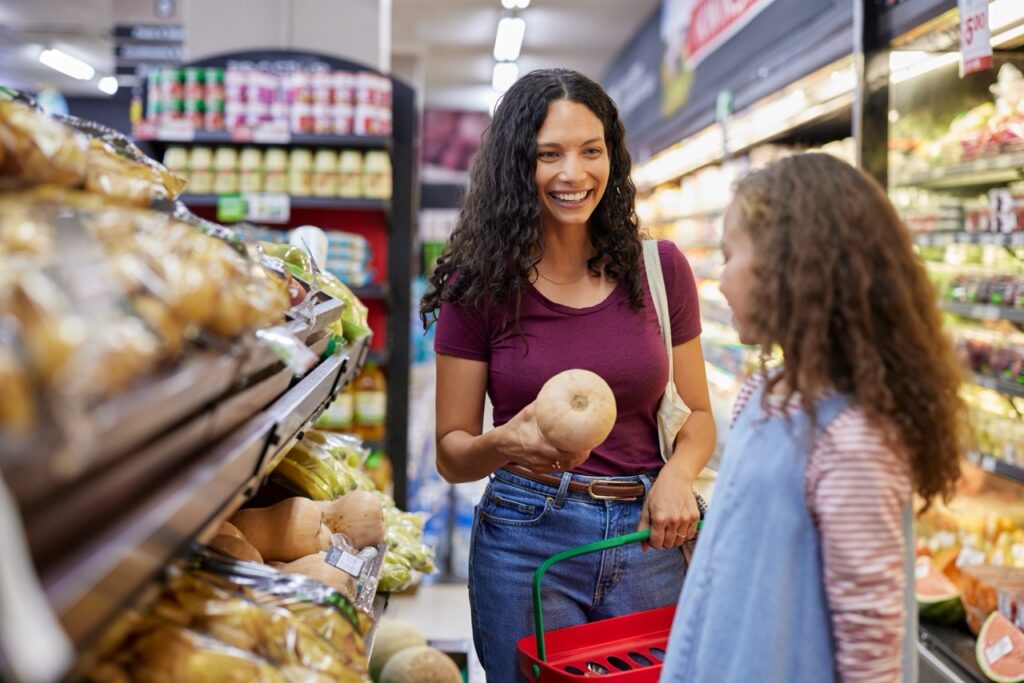
A Latin grocery store is not a generic grocery store with different products on the shelves. It is a distinct retail environment with its own operational rhythms, customer expectations, community obligations, and product management requirements that generic retail software consistently underserves. The owner of a carniceria, a mercado, or a full-service Latin supermarket who has tried to run their operation on software built for mainstream American retail knows this firsthand. The gaps show up everywhere: at the register, in the back office, in the payment flow, and in the customer relationship.
The stores that operate most successfully in this space are the ones running technology that was built to accommodate their specific reality rather than technology that requires them to adapt their operations to fit a system designed for someone else. Here is a clear account of what Latin grocery stores actually need from a POS, where generic software falls short, and what the right platform looks like.
Spanish-Language Interface That Works for Your Entire Team
For many Latin grocery stores, Spanish is the primary working language of the staff. Cashiers, stock associates, and department managers who are most comfortable working in Spanish should not have to navigate a POS system that only communicates with them in English. The cognitive overhead of working in a second language under the pressure of a busy checkout lane is real, and it contributes to errors, slowdowns, and training friction that a bilingual system eliminates.
This is not just a cashier interface issue. It extends to:
- Back-office reporting and management tools that managers need to use efficiently to do their jobs
- Training materials and system prompts that onboard new staff in the language they actually work in
- Customer-facing displays that present transaction information in the language the customer prefers
- Error messages and exception handling prompts that communicate clearly to the cashier regardless of their English proficiency
FlexRetail’s Spanish-language support is not a translated version of an English interface. It is a system built to operate natively in the language your team works in, which makes every part of the operation faster and more accurate for a predominantly Spanish-speaking team.
Payment Methods Your Community Actually Uses
Payment preferences in Latin communities often differ significantly from mainstream American retail patterns, and a POS that cannot accommodate those preferences creates checkout friction that costs transactions and customer relationships. Specific payment capabilities that matter in a Latin grocery context include:
- EBT and eWIC processing that works flawlessly and without a separate workflow, since many Latin grocery stores serve communities with significant food assistance program participation
- Remittance and international payment consideration for customers who manage finances across borders
- Cash handling tools that support efficient processing for a customer base that has historically had higher cash usage rates than the general population
- Contactless and mobile wallet support for the growing segment of customers who use Venmo and other digital payment tools
- Multilingual payment prompts on customer-facing terminals that do not require a shopper to read English to complete their transaction
FlexRetail’s payments and security platform handles all of these through a single integrated system, so your cashiers process every transaction through the same workflow regardless of how the customer is paying and regardless of which language they prefer to interact in.
Inventory That Reflects How Latin Grocery Actually Works
The product mix in a Latin grocery store creates inventory management challenges that generic retail software handles poorly. Specific requirements include:
- Variable-weight pricing for fresh meat cuts at the carniceria counter, fresh fish, bulk grains and dried goods, and produce sold by the pound
- PLU code management for the large number of unpackaged items that do not have standard barcodes
- Support for imported products whose UPC codes may not be in standard product databases and require manual catalog entry
- Expiration date tracking for fresh and imported perishables with variable shelf lives
- Inventory management for high-velocity items like tortillas, fresh produce, and prepared foods that turn quickly and require frequent reordering
The carniceria counter deserves particular attention. A Latin grocery store with a meat counter is running a completely different operation than a store that only sells packaged meat. Direct scale integration, custom cut pricing, label printing, and the ability to handle the full range of fresh meat transactions quickly and accurately at the counter are not optional features. They are daily operational requirements.
FlexRetail’s inventory management tools and butcher and meat market support are built to handle this complexity as a core part of the platform rather than a workaround.
Pricing Flexibility for a Competitive Market
Latin grocery stores often operate in highly price-competitive environments where the ability to update prices quickly and accurately across the store is a meaningful operational advantage. When a nearby competitor changes their pricing on a staple item, or when a supplier cost increase needs to be passed through to retail, the store that can execute that change across all registers within minutes is better positioned than one whose update process takes hours or requires manual changes at each terminal.
Promotional pricing flexibility is equally important. A Latin grocery store’s promotional calendar often reflects cultural and community events, including holidays like Cinco de Mayo, Dia de los Muertos, and religious observances, that do not appear on a mainstream retail promotional template. The ability to configure promotions that reflect your community’s specific calendar without being constrained by a generic promotional structure gives you the flexibility to run the promotions that actually matter to your shoppers.
FlexRetail’s back-office management tools support centralized price updates that push to all registers immediately, and a promotional configuration system flexible enough to reflect your store’s specific calendar and community.
Loyalty That Reflects Community Relationship
Loyalty in a Latin grocery store is built on relationship and cultural trust in a way that is distinct from mainstream grocery loyalty dynamics. A returning customer who is greeted by name, whose regular order is recognized, and who feels that the store understands and reflects their community is a loyal customer in a way that no points accumulation program can manufacture on its own.
What a well-configured loyalty program does in this context is support and systematize that relationship so it can scale beyond what any individual staff member can maintain from memory. When purchase history is captured at the customer level, your team can:
- Recognize returning customers and reference their purchase preferences at the register
- Identify your most loyal customers and ensure they receive acknowledgment that reflects their relationship with the store
- Track customers whose visit frequency drops and reach out before they shift their shopping elsewhere
- Build promotions that are targeted to the specific products your most loyal customer segments actually buy
FlexRetail’s customer loyalty platform connects purchase history to customer profiles within the same system running your registers, making the relationship data your store generates through daily transactions available to support the kind of community-rooted loyalty that defines the best Latin grocery operations.
The Right Technology Partner for Your Community
The technology running a Latin grocery store should reflect the community it serves, not require that community to adapt to a system built for someone else. That means Spanish-language support throughout the platform, payment flexibility that covers the full range of methods your customers use, inventory tools that handle the specific product mix of a Latin grocery operation, and a loyalty system that supports relationship-based retention rather than generic points accumulation.
FlexRetail’s platform for independent grocers is built around the principle that the best POS system is the one built for your store, not the one you adapt your store to fit. Schedule a demo to see how the platform is configured for a Latin grocery operation and what the difference looks like in practice.