
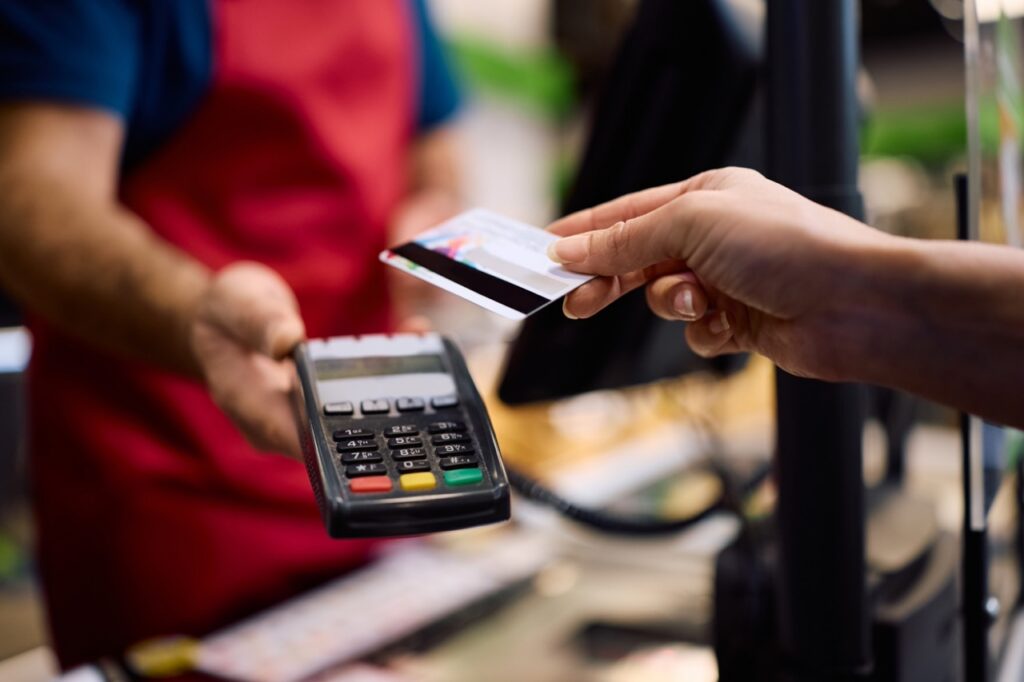
Payment processing fees are among the most consistently misunderstood costs in independent grocery operations. Most operators know they pay something for accepting card payments, and most have a rough sense of the percentage, but very few have a detailed understanding of how the fees are structured, what drives the differences between transaction types, or where the money actually goes. That knowledge gap means most independent grocers are making payment acceptance decisions without fully understanding their cost implications, and many are paying more than necessary without realizing it.
This is not a trivial cost. For a grocery store processing significant card volume on low-margin products, payment processing fees can represent a meaningful line item in the operating budget. Understanding how those fees work is the first step toward managing them intelligently rather than simply accepting them as a fixed cost of doing business.
Here is a clear explanation of how payment processing fees work, what drives the variation between transaction types, and what independent grocers can do to manage costs without limiting the payment flexibility their customers expect.
The Three Layers of a Payment Processing Fee
Every card transaction you process involves fees that flow to three different parties, and understanding who gets what clarifies why the total fee varies between transaction types.
The interchange fee goes to the card-issuing bank, the bank that issued the card the customer is using. This is typically the largest component of the total processing fee and is set by the card networks, Visa and Mastercard, based on a published schedule that varies by card type, transaction type, and merchant category. Interchange rates for grocery are generally lower than for other merchant categories because grocery is classified as a low-risk, high-volume category by the networks.
The assessment fee goes to the card network itself, Visa, Mastercard, Discover, or American Express, as a percentage of transaction volume. This fee is small compared to interchange and is consistent across all transactions on that network.
The processor markup goes to your payment processor, the company that handles the technical transaction routing and settlement. This is the component that is most negotiable and most variable between processor contracts.
When you see a quoted processing rate, it typically bundles all three of these components into a single percentage, which makes it difficult to understand what you are actually paying for each element and whether the processor markup portion is competitive.
Why Different Card Types Cost Different Amounts
Not all card transactions cost the same to process, and the variation can be significant enough to affect your overall processing cost meaningfully depending on your customer payment mix. The main factors that drive interchange rate differences include:
Card type is the largest driver. Debit cards generally carry lower interchange rates than credit cards because the funds are drawn directly from the cardholder’s account, reducing credit risk for the issuing bank. Within credit cards, rewards cards, including cash-back, travel, and points cards, carry higher interchange rates than basic credit cards because the issuing bank uses the interchange revenue to fund the rewards program. Premium rewards cards from certain issuers carry the highest interchange rates of all.
Transaction method also affects the rate. Card-present transactions where the physical card is tapped or inserted at the terminal carry lower interchange rates than card-not-present transactions like online orders, because the physical card verification reduces fraud risk.
Merchant category code affects the base rate applied to your transactions. Grocery stores benefit from a lower interchange category than general retail in most card network schedules, which is an advantage that should be reflected in your processing costs.
Understanding your payment mix, specifically what proportion of your volume is debit versus credit, and what proportion of your credit volume is rewards cards, gives you a more accurate picture of your effective processing cost than a single quoted rate. FlexRetail’s reporting tools give you the payment method breakdown data to understand exactly what your customers are using and therefore what your processing cost structure looks like at the transaction level.
Pricing Models and What They Mean for Your Cost
Payment processors offer several pricing models, and the one you are on significantly affects both your cost and your ability to understand what you are paying.
Flat rate pricing charges a single percentage for all transactions regardless of card type. It is simple to understand and predict but is often more expensive than alternatives for high-volume merchants because the flat rate is set to cover the processor’s costs across all card types including the most expensive ones. You pay the same rate whether a customer uses a basic debit card or a premium rewards card, even though those transactions cost the processor very different amounts.
Interchange plus pricing passes the actual interchange cost through to you and adds a fixed processor markup on top. This model is more transparent and often lower cost for high-volume merchants because you benefit from the lower interchange rates on debit and basic credit transactions rather than paying a flat rate that averages in the higher-cost transactions. The tradeoff is more complexity in your monthly statement.
Tiered pricing groups transactions into qualified, mid-qualified, and non-qualified categories with different rates for each tier. This model is common but often the least transparent because the processor defines the tiers and can move transactions between them in ways that increase your cost without your awareness.
For most independent grocery operations with significant volume, interchange plus pricing is worth evaluating seriously because the potential savings on debit and basic credit transactions can be meaningful at scale.
EBT Processing Has a Different Fee Structure
EBT transactions, including both SNAP food benefits and EBT cash benefits, are processed through a different network than standard card transactions and have their own fee structure. EBT interchange rates are generally lower than credit card rates, but EBT processing requires specific certification and may involve separate fees depending on your processor arrangement.
For independent grocers with significant EBT volume, understanding the specific fee structure for EBT transactions separately from your credit and debit processing costs gives you a more accurate picture of your true processing cost by payment type. This matters because EBT volume affects your overall average processing cost, and a processor whose EBT fees are significantly above market may be costing you more than a simple rate comparison would reveal.
FlexRetail’s payments and security platform handles EBT, eWIC, credit, debit, and digital wallet transactions through a single integrated system, which simplifies both the processing workflow and the fee visibility compared to managing multiple processors for different payment types.
Digital Wallets and Their Cost Implications
Digital wallet transactions including Apple Pay, Google Pay, and Venmo are generally processed as card-present transactions using the underlying card the customer has loaded into their wallet. The fee structure follows the interchange rate of the underlying card rather than a separate digital wallet rate in most cases, which means an Apple Pay transaction funded by a premium rewards card carries the same interchange rate as that card would if tapped directly.
The practical implication is that encouraging digital wallet use among your customers does not necessarily reduce your processing costs, but it also does not increase them in most cases. The more significant consideration is that digital wallet acceptance improves the checkout experience for a growing segment of customers and supports the contactless payment preference that is increasingly the default for younger shoppers.
What You Can Actually Negotiate
The interchange and assessment components of your processing fee are set by the card networks and are not negotiable with your processor. What is negotiable is the processor markup, the fees the processor adds on top of interchange and assessment for their own service. In a competitive market with a processor who wants your business, this markup is often more negotiable than independent grocers assume, particularly for operations with significant monthly processing volume.
Before your next processor contract renewal or when evaluating a new processor, request a detailed breakdown of your current effective rate by payment type and compare the processor markup component specifically against at least two alternatives. The savings on a well-negotiated processor markup on a high-volume grocery operation can be significant on an annual basis.
How Your POS Integration Affects Your Processing Options
Your POS system and your payment processor need to work together, and the integration between them affects both your operational experience and your ability to shop for better processing rates. A POS system that is locked to a single processor through a proprietary integration limits your ability to negotiate or switch processors even if you find a meaningfully better rate elsewhere.
FlexRetail’s payments platform is built around integrated payment processing that supports the full range of payment types independent grocers need, with the transparency and flexibility that lets you understand what you are paying and make informed decisions about your processing arrangement. Schedule a demo to discuss how payment processing is structured within the FlexRetail platform and what your cost picture would look like for your specific transaction volume and payment mix.