
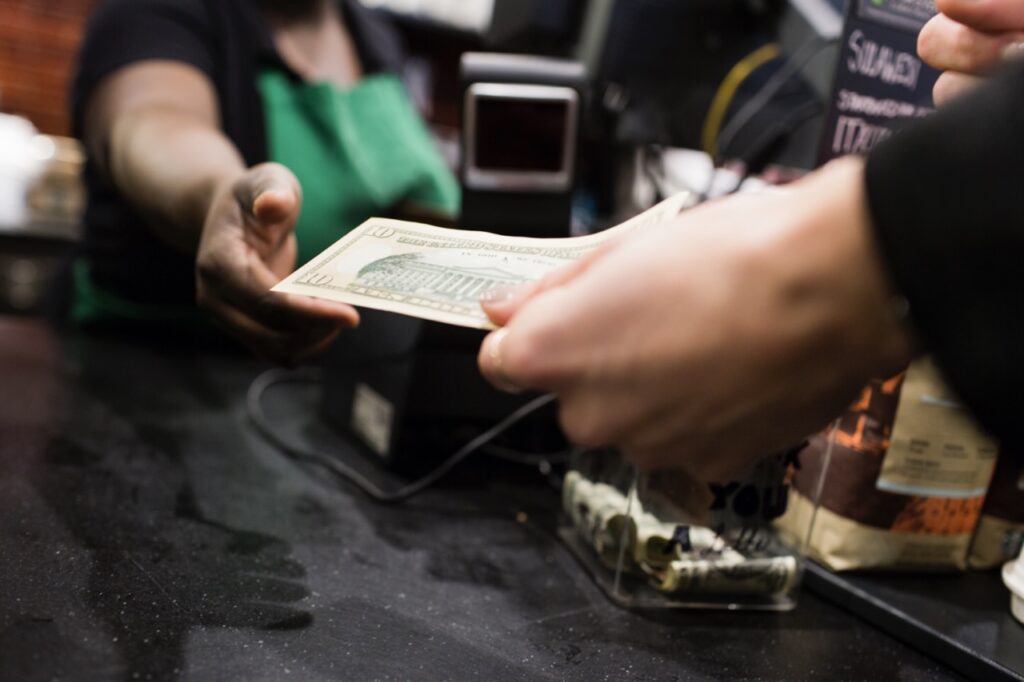
The conversation about cash versus cashless retail has been building for years, and in 2026 it is no longer theoretical for most independent grocers. Digital wallets are mainstream. Contactless payments are the default for a growing segment of shoppers. The operational overhead of cash handling, counting drawers, managing change, making bank deposits, and reconciling variances, is real and measurable. At the same time, the communities that independent grocers serve are often meaningfully more cash-dependent than the broader population, and the legal and reputational risks of going fully cashless are not trivial.
This is not a decision that has a single right answer. It depends on your customer base, your community, your state’s laws, and your operational priorities. What it requires is a clear-eyed analysis of the actual costs and tradeoffs rather than a decision made by following a trend. Here is how to think through it.
The Case for Reducing Cash Dependency
Cash handling is expensive in ways that are easy to underestimate when you are absorbing the costs incrementally. The true cost of cash in a grocery operation includes:
- Staff time counting drawers at shift changes and end of day
- Manager time reconciling variances between expected and actual cash totals
- Armored transport or bank deposit fees for moving cash off-site securely
- Losses from cash handling errors, short change, and counterfeit bills
- The shrink risk associated with having large amounts of cash in registers and on-site storage
- The friction of making change during high-volume checkout periods when speed matters most
A store that processes a significant percentage of its transactions in cash is absorbing all of these costs continuously. Reducing cash dependency, even partially, reduces each of them proportionally. For a store doing heavy transaction volume, the labor and operational savings from moving a meaningful share of transactions to electronic payment can be significant on an annual basis.
Digital and contactless payments also tend to be faster at the register than cash transactions, which contributes to checkout throughput during peak hours. A tap-to-pay transaction that completes in under two seconds versus a cash transaction that requires making change adds up across hundreds of daily transactions.
The Case for Keeping Cash Fully Supported
The argument for maintaining full cash acceptance is rooted in who your customers are and what your obligations to them are. Independent grocers disproportionately serve communities where cash remains a primary or preferred payment method. This includes:
- Unbanked and underbanked households, which according to the FDIC represent approximately 5.9 million American households as of the most recent national survey
- Elderly shoppers who are more likely to use cash as their primary payment method
- Immigrant communities where cash-based economic participation is more common
- Lower-income households that use cash as a budgeting tool rather than a preference
- Shoppers who are uncomfortable with digital payment methods for privacy or trust reasons
For an independent grocer whose community includes a significant proportion of any of these groups, going cashless is not just an operational decision. It is a statement about who the store is for. The reputational cost of being seen as inaccessible to community members who depend on cash can outweigh the operational savings from eliminating cash handling, particularly for a store whose competitive differentiation is rooted in community connection.
The Legal Landscape Is Not Uniform
Before making any move toward reduced cash acceptance, independent grocers need to understand the legal requirements in their state. Several states and municipalities have passed laws requiring retailers to accept cash, specifically to protect the unbanked and underbanked populations from being excluded from basic retail access.
States with cash acceptance requirements as of 2026 include Massachusetts, New Jersey, Rhode Island, Colorado, and New York City, among others. The specific requirements vary: some mandate full cash acceptance for all transactions, others allow cashless operations with specific accommodations such as on-site cash-to-card conversion kiosks.
Operating in a jurisdiction with cash acceptance requirements and going cashless without understanding those requirements creates legal exposure that is entirely avoidable. If your store is in a state or city with cash acceptance laws, that is the end of the cashless conversation until you have reviewed the specific requirements with counsel.
A Hybrid Approach Is Often the Most Practical
For most independent grocers, the answer is not binary. A hybrid approach that accepts all payment types while actively reducing the friction and cost associated with cash handling is more practical than either extreme. Specific strategies that work well include:
- Configuring your POS payment processing to make digital payment the path of least resistance without refusing cash, through fast contactless processing, prominent digital wallet acceptance, and self-checkout lanes that support all payment types
- Using cash management tools within your POS to reduce the time required for drawer counts and end-of-day reconciliation, so the labor cost of cash handling is minimized without eliminating cash acceptance
- Training cashiers to process cash transactions efficiently so the speed gap between cash and contactless is minimized during peak periods
- Monitoring your payment method mix through your POS reporting to understand what percentage of your transactions are cash and whether that percentage is shifting over time
FlexRetail’s reporting and analytics tools give you visibility into your payment method breakdown by day, time period, and department, so your decisions about cash handling investment are based on actual transaction data from your store rather than industry generalizations.
What Your POS Needs to Handle Regardless of Your Policy
Whether you maintain full cash acceptance, move toward a hybrid model, or operate in a jurisdiction that requires cash, your POS system needs to handle every payment type your community uses without friction. The goal is a checkout experience where the payment method a shopper uses is invisible from an operational standpoint: fast, accurate, and consistent regardless of whether the customer pays with cash, a contactless card, a mobile wallet, EBT, or Alipay.
FlexRetail’s payments platform is built around this principle. All payment types are supported through a single integrated system, so your cashiers are never in the position of apologizing for a payment type that does not work or redirecting a customer to a different lane because of how they are paying.
The cash versus cashless decision is ultimately a community decision as much as an operational one. Schedule a FlexRetail demo to walk through how the payment configuration options work and what your transaction data would show you about your current payment mix.