
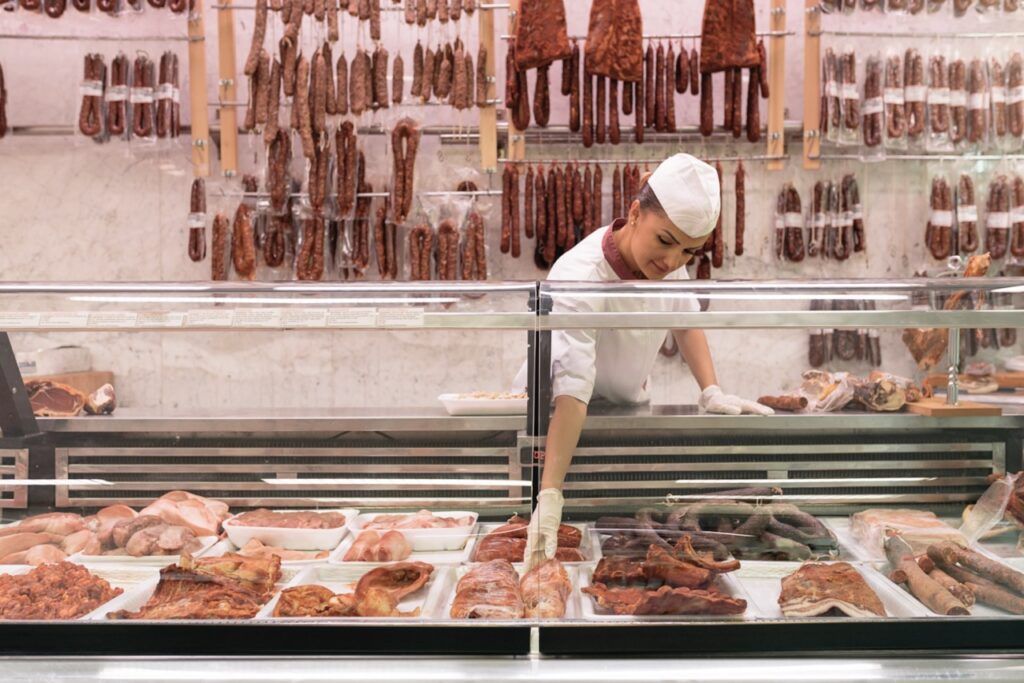
A butcher shop operates in one of the most margin-sensitive environments in food retail. Raw material costs are high and volatile. The product is highly perishable with a shelf life measured in days. Every cut, trim, and grind decision affects how much of each primal you recover as saleable product. Pricing has to reflect both market cost and competitive reality simultaneously. And the customer base expects a level of product knowledge and freshness that leaves no room for inventory mismanagement.
In this environment, the difference between a profitable operation and one that bleeds margin on waste and mispricing is often the quality of the data driving daily decisions. How much of each primal did you receive, how much did you cut, how much did you sell at which price point, and how much did you write off at the end of the week? A POS system that captures and surfaces this data gives a butcher shop the visibility to make those decisions well. One that does not leaves the owner operating on intuition in an environment where intuition alone is not sufficient.
Here is what the right POS system does for a butcher shop’s waste reduction and margin improvement, and what FlexRetail specifically offers for this segment.
Weight-Based Pricing at the Core of Every Transaction
The most fundamental requirement for a butcher shop POS is accurate weight-based pricing across every transaction. Unlike a packaged goods retailer where every item has a fixed price, a butcher shop sells product by the pound, by the half pound, by custom cut weight, and by the piece, sometimes all within a single customer transaction. Every one of those pricing calculations needs to be fast, accurate, and automatic.
Scale integration that communicates directly with the POS terminal is the foundation of this. When a customer orders a pound and a half of ground beef, the scale reads the weight and the POS calculates the price without manual entry. This eliminates two common sources of margin loss simultaneously:
- Pricing errors from manual weight entry or mental arithmetic under pressure
- Speed loss at the counter from cashiers stopping to calculate prices for each item
FlexRetail’s butcher and meat market POS is built with direct scale integration as a core feature, not an add-on. Every counter transaction flows through the same weight-to-price calculation automatically, keeping both accuracy and throughput at the level a busy butcher counter requires.
Cut Yield Tracking Connects Purchasing to Profitability
One of the most important and most undertracked metrics in a butcher shop is cut yield: how much saleable product you recover from each primal or subprimal purchase. A beef strip loin that costs a certain price per pound at wholesale needs to produce a calculable number of saleable steaks at a sufficient price per pound at retail to generate your target margin. If your yield is consistently lower than expected, you are either losing product to trim waste, to handling damage, or to a cutting process that needs adjustment.
Without a POS system that tracks receiving quantities and sales quantities at the cut level, yield analysis is a guesswork exercise. With one, it is a data analysis exercise. Specifically, connecting your receiving records to your sales records lets you calculate:
- The actual yield percentage you are achieving on each primal by comparing what you brought in to what you sold
- The variance between your expected yield and your actual yield on specific cuts
- The margin per pound you are actually generating on each product category after accounting for yield loss
- The cuts and products where yield improvement would have the most material impact on profitability
FlexRetail’s inventory management tools connect receiving data and sales data in a way that makes this kind of yield-level analysis practical for a shop owner who does not have a separate analytics team.
Expiration and Rotation Tracking Reduces Spoilage Write-Offs
Spoilage is the most direct form of margin loss in a butcher shop, and it is one of the most preventable when inventory is managed with adequate visibility. The challenge is that managing expiration dates manually across dozens of products with different shelf lives, different packaging dates, and different display cycles is error-prone and time-consuming.
A POS system with expiration date tracking at the item level gives your team the visibility to rotate stock consistently and to flag products approaching the end of their optimal window before they become a write-off. Specific capabilities that reduce spoilage include:
- Automatic alerts when products are within a defined number of days of their use-by date
- Inventory views sorted by expiration date so oldest product is always visible and prioritized
- Markdown tracking that lets you apply a reduced price to near-date product and capture some margin rather than writing it off entirely
- Waste logging that records the quantity and reason for each write-off, giving you the data to identify patterns in where your spoilage is concentrated
When spoilage data is tracked systematically, patterns emerge that are not visible when write-offs are handled informally. A specific product that consistently generates end-of-week spoilage may be ordered in quantities that do not match actual demand. A cut that spoils more often on certain days may indicate a display or storage issue. The data makes these patterns visible and actionable.
Ordering Decisions Grounded in Actual Velocity Data
Over-ordering is one of the primary drivers of spoilage in a butcher shop. When order quantities are based on habit rather than actual sales velocity data, you regularly bring in more product than you can sell in its optimal window. The problem compounds during slower weeks, around holidays when demand shifts unpredictably, and when a competitor runs a promotion that pulls traffic away temporarily.
Your POS sales data gives you the velocity information to order more precisely. When you can see exactly how many pounds of each cut you sold in the past week, the past two weeks, and the same period last year, your order quantities are based on demonstrated demand rather than estimation. Specific ordering improvements that come from velocity data include:
- Reducing order quantities on cuts that are consistently generating end-of-week inventory
- Increasing order quantities on cuts that are frequently selling out before the next delivery
- Adjusting orders ahead of known demand shifts like holidays, local events, and seasonal patterns
- Identifying the cuts where a small reduction in order quantity would eliminate most of your spoilage without creating stockout risk
FlexRetail’s back-office management tools surface this velocity data in a format that is accessible to a shop owner making ordering decisions without needing to pull custom reports.
Pricing Flexibility That Responds to Market Conditions
Meat pricing is unusually sensitive to wholesale market fluctuations. When beef prices spike due to supply chain disruptions, drought conditions in cattle country, or seasonal demand shifts, butcher shop operators need to adjust retail prices quickly and accurately to protect margin. A POS system that requires slow or cumbersome price updates creates a lag between cost increases and retail price adjustments that comes directly out of margin.
FlexRetail’s centralized pricing management allows price updates to be made from the back office and pushed to all registers immediately. When wholesale costs change, your retail prices can reflect that change within minutes rather than waiting for a batch update or requiring manual adjustments at each terminal.
This same flexibility supports markdown pricing for near-date product. Rather than writing off product at full cost, a quick markdown that moves it the same day captures partial margin and avoids a complete write-off. The ability to execute that markdown quickly at the system level rather than through manual workarounds makes it a practical daily tool rather than an occasional exception.
Customer Profiles That Support a Relationship-Based Business
A butcher shop’s competitive advantage over a supermarket meat counter is relationship and expertise. Customers who shop at an independent butcher often have specific preferences, recurring orders, and a relationship with the staff that makes them loyal in ways that are not purely price-driven. A POS system with customer profile capability supports this relationship by giving your team visibility into each customer’s purchase history.
Practical applications include:
- Knowing a returning customer’s regular order before they ask, which creates a personalized experience that a chain cannot replicate
- Flagging customers who have not been in recently for a re-engagement outreach
- Tracking which customers purchase which cuts most frequently and using that data to inform product availability decisions
- Building a loyalty program that rewards frequent customers in a way that reflects their actual purchasing behavior
FlexRetail’s customer loyalty platform connects purchase history to customer profiles within the same system running your registers, so the customer intelligence your shop generates through daily transactions is available to your team without a separate CRM tool.
Schedule a FlexRetail demo to see how the platform is configured for butcher shops and meat markets and what the waste reduction and margin improvement tools look like in practice.