
The shift from summer to fall and winter produce is one of the most significant inventory transitions an independent grocery store manages each year. Summer produce is high-velocity, highly perishable, and driven by local and regional sourcing relationships that come to an abrupt end when the season closes. Fall and winter produce brings a different product mix, different shelf life characteristics, different supplier networks, and different customer demand patterns that require a meaningfully different ordering approach.
The stores that manage this transition well do not discover it has happened after they are already overstocked on summer items that are no longer moving, or understocked on fall items that customers are actively looking for. They manage it proactively, using their historical POS data to time the shift, calibrate order quantities to seasonal demand, and build the supplier relationships that support reliable fall and winter sourcing before the transition period hits.
Here is what the fall and winter produce transition actually requires from your ordering approach and how your POS data supports each part of it.
Understand the Velocity Signature of Your Seasonal Transition
Every store’s seasonal produce transition has a specific timing and velocity signature that is visible in the historical POS data from prior years. The date when summer tomato sales start declining, the week when apple and pear velocity begins its seasonal climb, and the point when summer squash gives way to winter squash are all detectable in your transaction history rather than requiring you to guess based on calendar dates.
Pulling this data from the prior two years gives you a transition timeline that is specific to your store and your customer base rather than based on generic regional seasonality assumptions. Specific patterns worth identifying include:
- The week-over-week velocity decline rate for your top summer items in the late summer period, which tells you how quickly demand is falling and therefore how aggressively you should be reducing order quantities
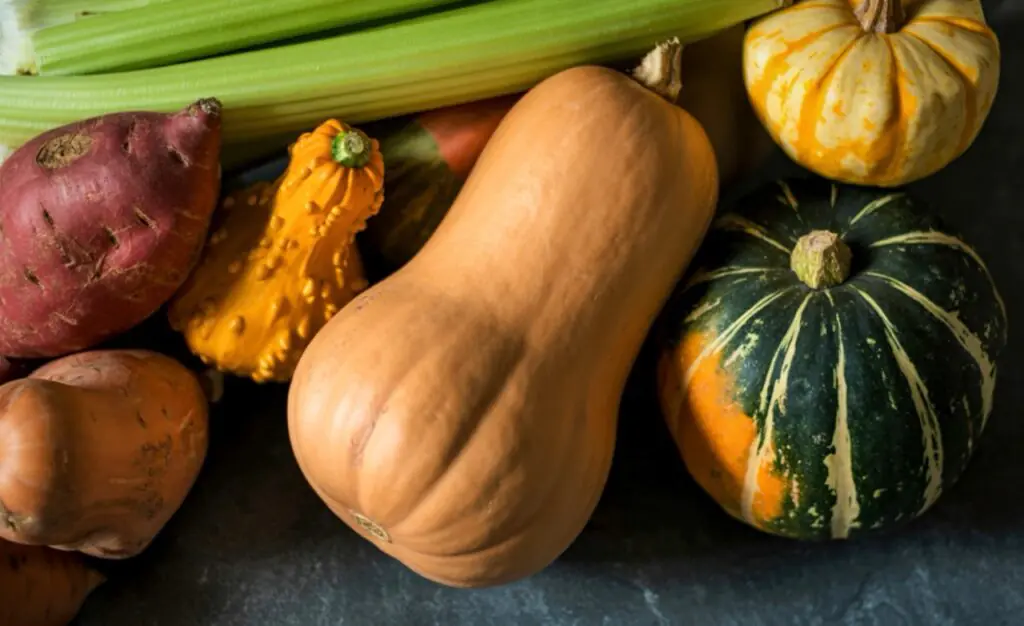
- The week when fall items like butternut squash, acorn squash, sweet potatoes, Brussels sprouts, and root vegetables begin showing meaningful velocity increases in your transaction data
- The timing difference between when fall produce starts moving and when your customers begin asking for specific holiday items, which tends to compress in the last weeks of October and into November
- The items that bridge the seasons, apples, pears, grapes, and late-season peppers for example, whose demand extends through both the summer wind-down and the fall ramp-up
FlexRetail’s reporting and analytics platform retains the historical transaction data that makes this kind of year-over-year comparison practical. The goal is a transition timeline built from your own data rather than a generic seasonal calendar.
Wind Down Summer Inventory Without Creating Write-Offs
The back end of summer produce season is when margin is most at risk from over-ordering and spoilage. As summer item velocity declines, the window between your last delivery of a perishable summer item and the point when it needs to come off the floor compresses. A flat of summer tomatoes that would have sold in two days in mid-July may take five or six days to move in mid-September, and that shelf life extension creates spoilage risk on quantities that felt safe to order six weeks earlier.
The ordering discipline that protects you here is connecting your real-time velocity data to your order quantities on a shorter cycle than you might use for stable mid-season inventory. During the transition period, reviewing summer item velocity weekly rather than monthly and adjusting order quantities to match the declining pace prevents the end-of-season overstock problem.
Specific tactics that work during the summer wind-down include:
- Reducing order quantities for summer perishables in response to the first two consecutive weeks of declining velocity, rather than waiting for a more dramatic drop
- Shifting promotional pricing to items approaching the end of their seasonal window to accelerate sell-through before the transition makes them harder to move
- Communicating proactively with local and regional summer suppliers about your winding-down order schedule so they can plan their own harvest and distribution accordingly
- Using your POS data to identify which summer items are holding velocity longest and maintaining reasonable order quantities on those while cutting back on the ones already declining
FlexRetail’s inventory management tools surface real-time velocity data that makes this kind of weekly ordering calibration practical without requiring a manual count of every perishable item.
Build Your Fall Supplier Network Before You Need It
Fall and winter produce comes from a significantly different supplier network than summer produce for most independent grocers. Where summer produce may be dominated by local farm relationships and regional distributors, fall and winter requires access to storage variety apples from the Pacific Northwest, citrus from Florida and California, root vegetables from larger regional operations, and imported items including tropical fruits that supplement the domestic fall offerings.
The lead time to establish or reactivate these supplier relationships is longer than many operators account for. A broadline distributor relationship for fall produce needs to be confirmed before the season starts, not during it. A direct relationship with an apple orchard for storage variety apples needs to be in place before the fall harvest is committed elsewhere. And the pricing negotiations that determine your fall produce margins are most effective when conducted before supply is tight and alternatives are limited.
Reviewing your prior year fall and winter purchase order history helps you identify which supplier relationships need reactivation and which new relationships might be worth developing based on gaps in your prior year sourcing that created stockout situations. FlexRetail’s back-office management tools retain purchase order history by supplier and season, making this review straightforward rather than requiring manual records reconstruction.
Calibrate Fall Order Quantities to Holiday Demand Patterns
Fall and winter produce ordering is complicated by the holiday demand spikes that create sharp, predictable velocity increases for specific items around Thanksgiving and Christmas. Sweet potatoes, green beans, cranberries, Brussels sprouts, winter squash, and certain citrus varieties all see demand patterns in the weeks around major holidays that are significantly higher than their baseline fall velocity.
The ordering approach that prevents stockouts during holiday demand peaks requires working backward from the holiday date to calculate order placement timing, factoring in your supplier lead times and the shelf life of the specific items involved. A root vegetable with a three-week shelf life and a five-day supplier lead time needs to be ordered two weeks before Thanksgiving to arrive with enough time to sell through during peak demand. A more perishable item may require multiple smaller orders placed closer to the holiday rather than a single large order.
Your POS data from prior holiday seasons tells you the specific velocity multiplier that each item experiences around each major holiday. If sweet potato velocity runs four times its October baseline in the two weeks before Thanksgiving, and you sold through your stock before the holiday last year, your pre-Thanksgiving order should reflect that multiplier rather than your standard fall order quantity.
Manage the New Product Mix That Fall Introduces
Fall and winter introduce specific produce items that are either absent from or marginal in your summer product mix. Pomegranates, persimmons, quince, fresh cranberries, specialty winter squash varieties, ornamental gourds, and fresh chestnuts are all examples of products that may be worth stocking during fall and winter but that require their own introduction management because their velocity in your store may not yet have a reliable historical baseline.
For items you are introducing for the first time or reintroducing after a year’s absence, starting with conservative order quantities and adjusting based on the first two to three weeks of actual velocity data is more reliable than estimating demand from scratch. Your loyalty program data may give you some signal about which customer segments have purchased these items in the past and therefore how broad the potential demand is, but the velocity data from the item’s first weeks on the shelf is the most reliable calibration tool you have.
FlexRetail’s inventory management system captures velocity data from the first day a new item appears in your catalog, giving you the real-time sell-through picture needed to adjust second and third orders based on actual rather than estimated demand.
Use the Transition to Reassess Your Produce Department Layout
The seasonal transition is also the right time to reassess your produce department layout for the fall and winter period. The display configuration that worked for summer produce, with its emphasis on colorful stone fruits, berries, and vine-ripe tomatoes, may not be optimal for fall and winter, where root vegetables, squash, apples, and citrus become the dominant categories.
Your POS data can inform this layout decision by showing you which fall and winter items generate the highest velocity in their first days on the floor versus which take longer to build momentum. Items that sell fastest when prominently displayed belong in your highest-visibility locations. Items that require more customer education before purchasing, specialty squash varieties and unusual citrus for example, may benefit from placement near staff who can answer questions rather than self-service display positions where an unfamiliar product may be passed over.
Schedule a FlexRetail demo to walk through how the reporting and inventory tools support seasonal transition planning for a store with your produce mix and supplier relationships.