
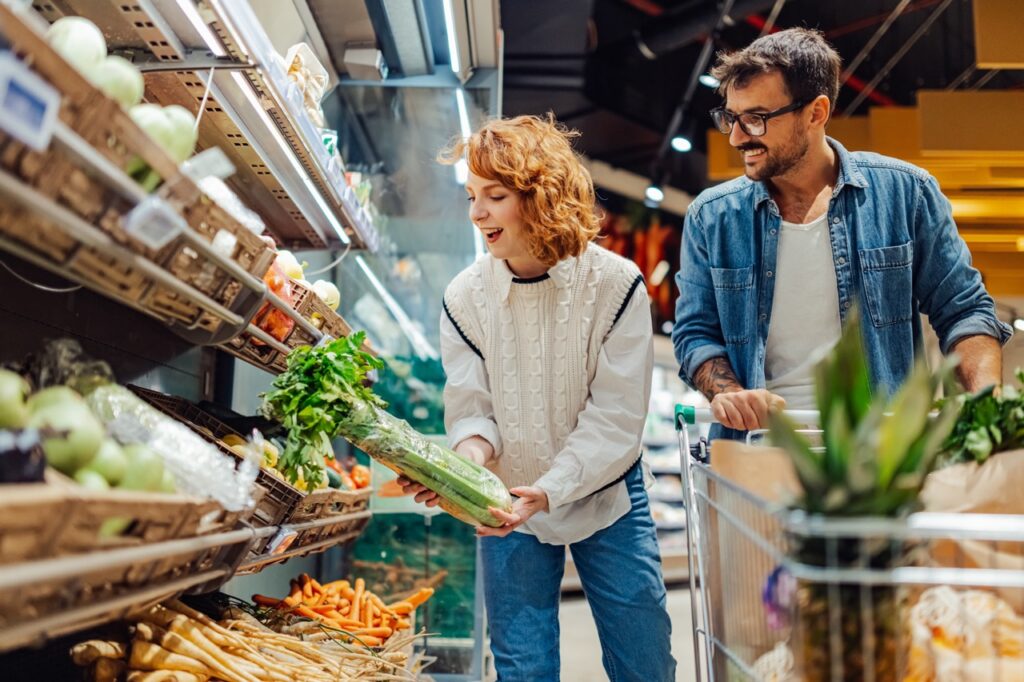
Every independent grocery store has a version of the same problem. A new customer comes in, has a reasonable experience, buys what they came for, and then never returns. They are not dissatisfied. The visit was fine. They simply did not develop a habit around your store, and without a specific reason to return, they defaulted back to wherever they were shopping before or continued sampling other options in their area.
The conversion of a one-time visitor into a regular shopper is one of the highest-value outcomes in independent grocery retail. A regular who shops weekly with a forty-dollar average basket is worth over two thousand dollars per year. A regular who shops twice a week is worth twice that. The economics of converting even a fraction of your one-time visitors into this kind of regular customer dwarf most other marketing investments available to an independent grocer.
The challenge is identifying who the one-time shoppers are, understanding what brought them in and what would need to happen for them to return, and creating the conditions for a second visit before the window for habit formation closes. Your POS and loyalty data are your primary tools for each part of this challenge.
Identify Your One-Time Visitors Before They Become Lost Customers
The first step in converting one-time shoppers into regulars is identifying them while they are still recent enough to re-engage. A customer who made one purchase three weeks ago is meaningfully more likely to return in response to an outreach than one who visited six months ago and has since established a routine at a different store.
For customers who enrolled in your loyalty program during or after their first visit, this identification is straightforward. Your loyalty data shows customers with exactly one transaction, and your POS records show the date of that transaction. Filtering for members with one transaction in the past fourteen to twenty-one days gives you your current one-time visitor pool that is still within the re-engagement window.
For customers who did not join the loyalty program, you do not have individual-level data. This is part of why loyalty enrollment at the point of first purchase is so operationally valuable. A customer who joins your loyalty program during their first visit has given you the ability to identify them as a one-time visitor later and to reach them with a specific reason to return. A customer who does not join is invisible in your data.
FlexRetail’s customer loyalty platform captures the purchase history and enrollment data that makes this one-time visitor identification practical. The system can segment members by visit frequency, making the one-transaction segment easy to identify and act on rather than requiring manual data analysis.
Understand What Their First Visit Tells You
The basket data from a one-time visitor’s first purchase contains information about what brought them to your store and what they were looking for. A customer whose first basket is concentrated in a specific category, all produce, all specialty international items, all prepared foods, is telling you something about the specific need that brought them in. A customer whose first basket looks like a full weekly shop was probably trying your store as an alternative to their usual grocery and is a higher-conversion prospect than a customer who came in for a single specific item.
Specific basket patterns that indicate higher conversion potential include:
- Large first baskets that span multiple departments, suggesting the customer was evaluating your store as a primary shopping destination rather than visiting for a specific item
- First baskets that include items from your specialty or differentiated departments, suggesting the customer was drawn by something specific that your store offers
- First baskets that include loyalty program enrollment, which indicates the customer was interested enough in the prospect of returning to sign up
Basket patterns that indicate lower conversion potential include:
- Very small single-category baskets that suggest a convenience purchase rather than a shopping destination evaluation
- First baskets concentrated exclusively in commodity items that are available everywhere
This basket-level analysis, available through FlexRetail’s reporting and analytics tools, helps you prioritize which one-time visitors are worth the most re-engagement investment rather than treating every first-time shopper identically.
Create a Specific Reason to Return Within the First Two Weeks
The window for converting a one-time visitor into a regular is narrowest and most valuable in the first fourteen days after their initial visit. After two weeks without a return visit, shopping habits are already beginning to consolidate elsewhere. After a month, a substantial portion of one-time visitors have effectively made a decision about your store without having been given a compelling reason to return.
A direct outreach to loyalty-enrolled one-time visitors within the first week to ten days, with a specific and relevant reason to return, is the most effective single intervention for conversion. The outreach needs to:
- Reference something specific about their first visit, either the category they purchased from or a general acknowledgment that you noticed they were new
- Offer a concrete incentive for a second visit that is proportionate to the potential value of a converted regular customer
- Give them a reason to return in a specific, short timeframe rather than an open-ended offer that gets deferred indefinitely
A simple example: a loyalty member whose first basket was heavily produce-focused receives a message within a week noting that your produce selection has just been refreshed with new fall arrivals, along with a ten percent discount on their next produce purchase, valid for the next ten days. This message is relevant to what they purchased, gives them a specific and timely reason to return, and treats them as someone whose patronage is valued rather than a generic marketing list recipient.
FlexRetail’s loyalty tools support targeted outreach based on purchase history and visit frequency segmentation, making this kind of personalized first-purchase follow-up practical without requiring a dedicated marketing team.
Design the Second Visit to Build the Habit
Getting a one-time visitor back for a second visit is valuable but not sufficient. The second visit needs to deliver an experience that builds confidence and begins the habit formation process. Research on retail habit formation consistently shows that the first three to five visits are where the pattern is set, and each early return visit either reinforces or undermines the emerging habit.
During the second visit, the experience needs to exceed the first one in at least one specific way. This might be a staff interaction that makes the customer feel recognized, a product discovery that exceeds their expectations, a checkout experience that is noticeably faster or smoother than they expected, or simply the confirmation that the things they liked about the first visit are reliably present rather than situational.
Your POS data supports this through the loyalty profile that builds with each visit. A cashier who can see that a returning loyalty member made their first purchase two weeks ago and came back has the information to make a brief, genuine acknowledgment of the return visit. This kind of recognition, which costs nothing, sends a signal that the store is paying attention in a way that chains consistently fail to replicate.
Track Conversion Rate as an Operational Metric
One-time-to-regular conversion is worth tracking as a specific operational metric rather than assuming it is happening at an adequate rate. Your loyalty data can tell you what percentage of new loyalty enrollees made a second purchase within thirty days, which is a reasonable proxy for your first-purchase conversion rate.
If you find that your thirty-day second-purchase rate is low relative to what you would expect given your one-time visitor volume, that is an operational signal worth investigating. It may indicate that your first-visit experience has gaps that are preventing conversion, that your re-engagement outreach timing or messaging needs adjustment, or that your store is attracting a high proportion of visitors who came for a specific purpose that does not recur.
FlexRetail’s reporting tools give you the loyalty member visit frequency data to track this conversion rate over time and to see whether specific changes to your outreach or in-store experience are moving the metric in the right direction. Schedule a demo to see how the loyalty segmentation and reporting capabilities support a systematic approach to first-purchase conversion.