
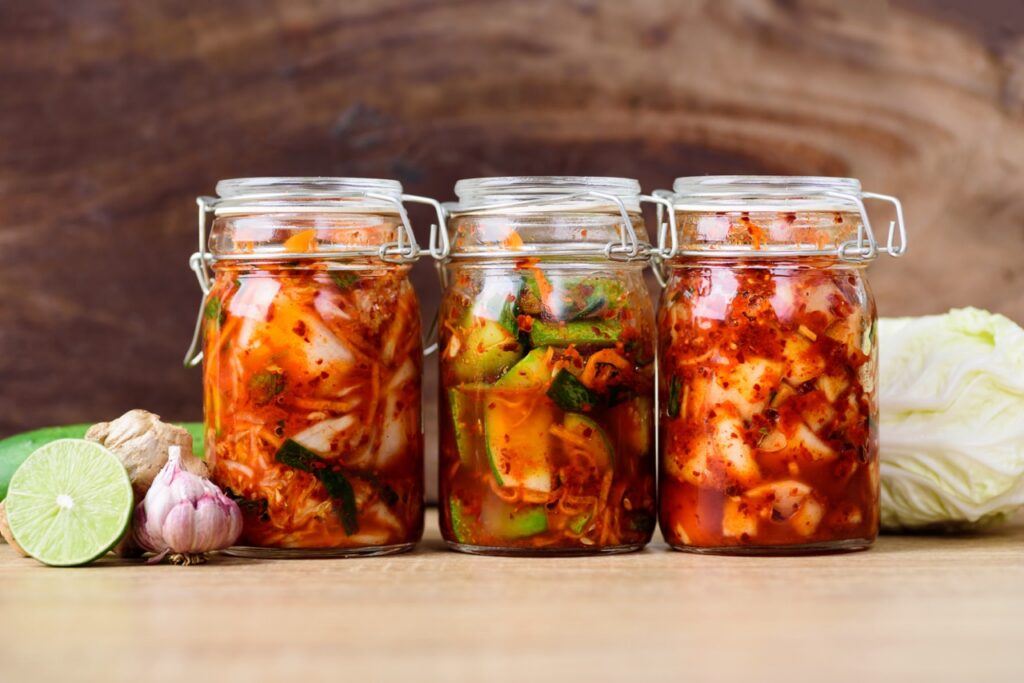
A Korean grocery store occupies a unique position in the independent grocery landscape. It serves a core Korean customer base with deep product expectations around freshness, authenticity, and sourcing while simultaneously attracting a broad multicultural shopper base drawn by Korean cuisine’s mainstream popularity, the quality of the produce, and the store’s reputation for carrying products unavailable in conventional grocery formats. Managing both audiences well, without losing the authenticity that defines the store’s identity, requires a level of inventory intelligence and operational precision that generic POS systems are not built to support.
The product mix in a Korean grocery store is simultaneously high-velocity, highly perishable, heavily imported, and deeply seasonal in ways that compound the inventory management challenge. Fresh kimchi and banchan prepared in-house turn in hours. Imported pantry staples arrive on irregular schedules from distributors whose supply chains can be affected by factors thousands of miles away. Fresh produce varieties including perilla, Korean radish, chrysanthemum greens, and bitter melon have short shelf lives and demand patterns that shift with the cooking habits of the community. And the prepared food section, often one of the highest-traffic areas in the store, needs to be managed to a food service cadence rather than a retail replenishment cadence.
Here is how Korean grocery stores can use POS data to manage this complexity more precisely and protect the margins that make the operation sustainable.
Build Separate Velocity Profiles for Your Korean Core and Your Multicultural Audience
One of the most operationally important things your POS data can reveal in a Korean grocery context is whether specific products are driven primarily by your Korean core customer base or by your broader multicultural audience, because the demand patterns for these two segments often differ in ways that affect ordering decisions significantly.
Your core Korean customers tend to purchase with high frequency and deep product knowledge, buying specific brands of gochujang, specific varieties of doenjang, and specific imported snack products they grew up with and will not substitute. This segment is relatively predictable in its purchasing behavior and highly sensitive to stockouts on key items.
Your multicultural audience tends to purchase with higher discovery orientation, buying products they encountered in a Korean restaurant or saw in a cooking video, and with more flexibility around brand and variety. This segment is less predictable in velocity but more responsive to in-store discovery and promotion.
When you can see in your loyalty and transaction data which products are purchased almost exclusively by high-frequency regulars versus which are purchased by a broader mix of customers, you can make smarter decisions about inventory depth, safety stock levels, and promotional investment. Your core Korean pantry staples need conservative reorder thresholds that ensure you never run out. Your discovery-oriented products need the kind of prominent placement and fresh rotation that keeps the multicultural audience engaged and exploring.
FlexRetail’s reporting and analytics platform surfaces this purchase pattern data by product and customer segment, giving you the visibility to manage your two audiences as distinct inventory priorities rather than as a single undifferentiated customer base.
Manage Prepared Food and Banchan as a Food Service Operation, Not a Retail One
The prepared food section of a Korean grocery store, including banchan side dishes, freshly made kimchi, rice cakes, and hot food items, operates under a completely different inventory logic than packaged goods retail. Prepared food is made in batches based on anticipated demand, has a hold time measured in hours rather than days, and generates shrink through both unsold product and ingredient waste that needs to be tracked separately from the retail shrink in the rest of the store.
Managing this section profitably requires connecting your production planning to your actual sales velocity data rather than producing based on habit or intuition. Your POS data can tell you how many units of each banchan item typically sell on a Tuesday morning versus a Saturday afternoon, which items see significant demand spikes when specific produce or protein items are featured elsewhere in the store, and which items consistently generate end-of-day waste that could be reduced by adjusting batch sizes or production timing.
The markdown strategy for near-end-of-hold-time prepared food also benefits from POS data support. When you can see in real time how much of a specific item remains on the shelf versus how quickly it has been selling at that hour, you can time markdown decisions to maximize sell-through at a reduced price rather than writing off unsold product at full cost.
FlexRetail’s inventory management tools support production-to-sale tracking for prepared food departments, connecting what was made to what was sold in a way that makes your banchan section margin visible rather than estimated.
Use Festival and Cultural Calendar Data to Plan Demand Spikes
Korean grocery shopping patterns shift significantly around major Korean cultural events and holidays including Chuseok, Seollal, Children’s Day, and Pepero Day, as well as around the American holidays and seasonal events that your multicultural customer base responds to. These demand spikes are predictable once you have the historical POS data to quantify them, but they are not reflected in any generic retail planning template.
Pull your transaction data from the two weeks surrounding each major cultural event in the prior year or two and identify which specific SKUs and categories showed the most significant velocity increases. The answers are often quite specific: certain rice cake varieties for Chuseok, specific gift set configurations for Seollal, and particular ingredient combinations that correspond to traditional recipes for each occasion.
Building these event-specific demand increases into your ordering calendar as pre-planned inventory adjustments rather than reactive restocking ensures you have product to meet peak demand rather than running out during your highest-revenue period of the seasonal cycle.
Track Imported Product Availability Against Actual Turn Rates
Korean grocery stores depend heavily on imported products that cannot be substituted with domestic alternatives when supply is tight. Specific brands of ramen, specific varieties of seaweed snacks, particular soy sauce and sesame oil brands, and imported produce that has no domestic equivalent all create supply chain variability that requires proactive inventory management rather than reactive reordering.
Your POS velocity data gives you the turn rate for each of these items, and combining it with your receiving history gives you the lead time data to calculate how much buffer stock you need to carry without over-investing in inventory that ties up capital. For your most critical imported items, this buffer stock calculation should account not just for average lead time but for the worst-case delay scenario your receiving history shows is realistic.
FlexRetail’s back-office management tools connect receiving records and sales velocity in a single system, making data-driven buffer stock planning a practical part of your weekly ordering review rather than a manual calculation that requires pulling data from multiple sources.
Use Loyalty Data to Stay Ahead of Shifting Community Preferences
The Korean community in the United States is not monolithic in its food preferences, and those preferences shift over time as new generations develop their own cooking habits, as regional Korean cuisines become more widely known, and as crossover interest from the broader multicultural audience creates demand for products that were previously niche. Your loyalty program purchase history is the most sensitive early detection system for these shifts available to you.
When a product category that was previously purchased almost exclusively by a specific customer segment starts appearing in the baskets of a different segment, that pattern in your data is a signal worth acting on before it becomes obvious on the shelf as a stockout. When a new product you stocked experimentally starts showing high velocity in its first few weeks, your loyalty data can tell you which customer segments are driving that velocity and whether it is likely to be sustained or whether it represents a novelty purchase pattern that will normalize.
FlexRetail’s customer loyalty platform captures purchase history at the customer and product level, giving you the community-specific demand intelligence that positions your store to serve the full range of your customer base precisely. Schedule a demo to see how the inventory and reporting tools work together for a store with your product mix and community profile.